

What is hash? How hashish is made, the main types and THC levels

By the Golden High teamUpdated 8 October 20269 min read
The hash guide
Hash, also known as hashish or cannabis resin, is the resin of the cannabis plant: the tiny sticky glands on female flowers, separated from the plant material and pressed into a block. In France, seized resin averaged 29.6% THC in 2024 according to the OFDT (the French drugs observatory), and it remains a controlled drug there. Here's where it comes from, how it's made, how to tell the main types apart, and what makes our Delta-P resins different.

Marocain Hash Delta-P 30 %
The spirit of Rif resins in a Delta-P version: a firm texture that crumbles, with spicy, earthy notes.
From7,90 €View product →
Jaune Mousseux 30 %
The frothy resin that made the shop's name: soft texture, light colour.
From7,90 €View product →The definition
Hash is cannabis resin.
Whether you say "hash", "hashish", "resin" or, in French slang, "shit", you're talking about the same thing: a concentrate made from the glandular trichomes of cannabis. These are tiny mushroom-shaped glands that cover the female flowers. That's where the plant produces its cannabinoids (THC, CBD…) and its terpenes, the molecules behind its smell.
In 2020, a team at the University of British Columbia showed that the stalked trichomes on mature flowers, the largest ones, are also the richest in cannabinoids and monoterpenes. Collecting those glands, separating them from the leaves and stems, then pressing them together: that's the whole idea behind hash.
So the difference with weed is simple: weed is the whole dried flower; hash is what you extract from it. That's why it's usually more concentrated in cannabinoids.
How it's made
Sieve, rub, freeze, press.
Every method aims to separate the trichomes from the plant. What changes is the tool: a sieve, your hands, ice water or heat. Each one gives a product with a different texture and purity.
| Method | How it works | Where / when | What you get |
|---|---|---|---|
| Dry sieving | Dried plants are shaken or beaten over a fine screen; the trichome powder falls through | Morocco (Rif), Arab world | Powder pressed into slabs; quality depends on how fine the screen is |
| Hand rubbing (charas) | Fresh buds are rubbed between the hands and the resin builds up on the palms | Himalayan regions | Resin collected straight from the hands |
| Ice water | Flowers are plunged into ice water: the cold makes the trichomes brittle so they snap off | Modern method (water hash, ice hash, bubble hash) | Concentrated resin, no solvent |
| Rosin | Moderate heat and steady pressure applied to the flowers | Recent technique, solventless | Concentrate made without solvent |
In Morocco, the 2003 survey by the United Nations Office on Drugs and Crime (UNODC) describes the traditional chain: drying the plants after harvest, storing the bundles, sieving, collecting the powder known as chira, pressing, then shaping it into bars. Back then it took 100 kg of raw cannabis to get 6 to 7 kg of powder of the most common quality.
We cover the modern variations in two articles: frozen hash, made in the cold, and static hash and dry sift, two dry-sieving methods taken to the extreme.
The main types
Moroccan, charas, frozen: finding your way.
Hash names mix geographic origins, production methods and trade names. The same word can mean very different products from one shop to the next. Here are the most common reference points.
Moroccan
The historic resin of the French market, dry-sieved in the Rif. Rather firm texture that crumbles, earthy and spicy profile. Morocco is still the main producing country according to the OFDT.
Charas
Hand-rubbed resin from the Himalayan regions. A craft method, far rarer on the European market than sieved hash.
Frozen
The name given to resins made in the cold (ice water or ice). Known for their texture and concentration.
Dry and static
Repeated dry sieving, sometimes helped by static electricity, to keep only the trichome heads.
Piatella
A widespread name for resins known to be soft and creamy. We've written a dedicated article on piatella.
Jaune Mousseux
A light-coloured resin with a frothy, soft texture that has become a classic of hemp shops.
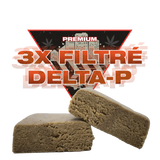
On the illicit market, the OFDT reports very high-THC products such as wax, dry or "3x filtered", sold for €20 to €50 a gram.
What the sources say
Hash is twice as strong as in 2012.
Today's hash has little in common with what was around in the 2000s. Official French data and field research in Morocco tell the same story.
OFDT · drug supply in France in 2024
The average THC content of seized resin reached 29.6% in 2024, versus 15.9% in 2012: +86% in twelve years. For weed it's 14.3%. The average retail price of resin is still around €8 a gram.
OFDT · 2024 seizures
64.7 tonnes of resin were seized in France in 2024, versus 87 tonnes in 2023 (−26%). Customs seizures of cannabis pollen went from 5.6 tonnes in 2022 to 20.3 tonnes in 2024.
International Journal of Drug Policy · 2014
Researchers Pierre-Arnaud Chouvy and Kenza Afsahi describe how traditional Moroccan kif was quickly replaced by hybrids with resin yields three to five times higher, and far more potent.
ANSM · 2024
Several hundred poisonings linked to synthetic or semi-synthetic cannabinoids were recorded in France in early 2024, according to the ANSM (the French medicines agency). A resin sold without testing can contain something other than what's on the label.
The OFDT puts the rise in resin potency down to hybrid strains developed in Europe and sold on to Moroccan growers. In other words, today's "Moroccan" often comes from modern genetics. References at the bottom of the page.
The block
A block of hash: what is it?
The word comes from the shape. In Morocco, the UNODC described in 2003 a hashish sold "in the form of tablets or soap bars", usually weighing 250 grams, called tbisla. The resin powder is compressed, and sometimes heated, to form this block. The small pieces sold on the street (a "barrette" in French) are cut from it.
On the illicit market, there's no way of knowing what a block really contains: neither its THC level nor whether other substances are present. That's the fundamental difference with a shop product tested in a lab. For a product sold in a shop, here's what to check:
- The stated content: a serious product states its cannabinoid content and stays below 0.3% THC.
- The lab test: every batch should be traceable to a laboratory certificate of analysis.
- Texture and smell: they tell you about the style (firm, soft, frothy), not the strength.
- The name: "Moroccan", "frozen" or "piatella" describe a style, not a guaranteed origin.
What French law says
THC hash remains a controlled drug in France.
In France, THC is classified as a controlled drug. THC cannabis resin is therefore one too: producing, selling, possessing and using it are prohibited there. Only products made from authorised hemp varieties and containing less than 0.3% THC are tolerated, under the French decree of 30 December 2021.
- THC resin bought on the street: a controlled drug in France, of unknown composition.
- Resin with HHC, THCP or H4-CBD: also controlled drugs in France, classified by the ANSM in 2023 and 2024.
- Driving after using, whatever the product: a criminal offence in France, including with a hemp product.
And at Golden High?
Our Delta-P resins: the style, without the THC.
Our resins follow the styles of hash (Moroccan, frothy, frozen, piatella, filtered), but they aren't THC resins: they're Delta-P resins, based on CBDX, below 0.3% THC and lab tested. The Delta-P content is shown on every product page. You'll find them all in our Delta-P hash collection.
For a profile close to Rif resins, Marocain Hash Delta-P 30 % has a firm texture and spicy notes. If you prefer a light, soft resin, Jaune Mousseux 30 % is our classic. And to compare the whole range, read our guide to Delta-P resins.
Pick your style
Firm and spicy, soft and creamy, light and frothy: the texture changes how it rolls and how it tastes.
Check the content
Start with a moderate level if you're new to Delta-P. The content is shown on every product.
Take your time
A small amount, plenty of time between doses, and never before driving. Adults only.
Your questions
What people ask us about hash.
What is hash, and what kind of drug is it?
Hash is cannabis resin, meaning the trichomes of female flowers pressed into a block. When it contains THC, it's a controlled drug in France, just like cannabis flower.
What's the difference between hash and weed?
Weed is the dried cannabis flower. Hash is the resin extracted from those flowers. In 2024, resin seized in France averaged 29.6% THC versus 14.3% for weed, according to the OFDT.
How is hash made?
The trichomes are separated from the plant by dry sieving, hand rubbing (charas), ice water, or heat and pressure (rosin), then the resulting powder or resin is pressed.
What is a block or soap bar of hash?
A block of pressed resin. In 2003, the UNODC described Moroccan soap bars usually weighing 250 grams, called tbisla. The small pieces sold on the street are cut from them.
How much THC is in hash?
On average 29.6% in resin seized in France in 2024, versus 15.9% in 2012, according to the OFDT. On the illicit market, it's impossible to know the real content of any given piece.
Is hash legal in France?
No, not THC hash: it's a controlled drug in France. Only hemp products with less than 0.3% THC are tolerated there, like the resins sold in shops and lab tested.
What's the difference between hash and a Delta-P resin?
Hash from the illicit market contains an unknown amount of THC. Our Delta-P resins follow the styles of hash but are based on CBDX, below 0.3% THC and lab tested.
Sources
The references cited in this article.
- OFDT (2026). Drug supply in France in 2024 – summary note (in French).
- UNODC and Kingdom of Morocco (2003). Morocco Cannabis Survey 2003 (in French).
- International Journal of Drug Policy (2014). Hashish revival in Morocco.
- The Plant Journal (2020). Cannabis glandular trichomes alter morphology and metabolite content during flower maturation.
- Drug and Alcohol Dependence (2018). Exploring Twitter data on emerging trends in Rosin Tech marijuana concentrates.
- Wikipedia (French). Haschich (etymology and traditional methods).
- ANSM (2024). The ANSM adds new cannabinoids to the list of controlled drugs (in French).
Keep reading