

THC effects: what THC is, how long a high lasts and the law in Italy

By the Golden High teamUpdated 28 October 20269 min read
Cannabinoids
THC effects start with the molecule itself: THC, or delta-9-tetrahydrocannabinol, is the main psychoactive cannabinoid in cannabis, it binds to CB1 receptors in the brain and it's what causes the "high". Smoked, the effect kicks in within minutes, peaks after 15 to 30 minutes and fades in 2 to 3 hours; eaten, it appears after 30 to 90 minutes and can last 4 to 12 hours. Here's what it really is, what it does, the risks it carries and what Italian law says in 2026.

Super Gelato Delta-P pod
Our refillable pod in the Super Gelato version: a handy format with a smooth, creamy profile. It contains no more than 0.3% THC.
From23,90 €View product →
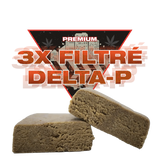
3X Filtré Delta-P 40%
Our triple-filtered resin, soft texture and earthy profile, with the percentage shown on the label and lab-tested.
From7,90 €View product →The definition
What THC is: the psychoactive molecule in cannabis.
THC stands for tetrahydrocannabinol. When people mention it without further detail, they mean delta-9-THC, the most abundant form in the plant and the one that produces cannabis's psychoactive effect. The plant actually makes mostly its acid form, THCA, which turns into THC under heat: that's why weed is smoked or heated.
Its structure was described in 1964 by two chemists from the Hebrew University of Jerusalem, Yechiel Gaoni and Raphael Mechoulam, who isolated it from hashish. Since then, THC has become the benchmark against which every other cannabinoid is compared. To go further on the molecule, it's all in what is delta-9.
The mechanism
What THC does to the brain.
THC works because the body already has a system built to receive it: the endocannabinoid system. In 1990, an American research team cloned the first cannabinoid receptor, now called CB1, which is abundant in the brain. THC binds to it and changes its activity: that's where the effects you feel come from.
CB1 receptors
Abundant in the central nervous system. They're THC's main target and the starting point of its psychoactive effects.
Peripheral receptors
Cannabinoid receptors also exist outside the brain, in various tissues. That's one reason why THC doesn't only act on perception.
We explained the role of these receptors, without jargon, in CB1 and CB2: the receptors that drive your experience.
What the sources say
THC effects: what research reports.
The effects of THC depend on the dose, how it's taken, how used to it you are and the setting. The same amount can give one person a good time and another an unpleasant experience. Here are the most solid scientific references this article is based on.
Gaoni and Mechoulam · 1964
In the Journal of the American Chemical Society they publish the isolation, structure and partial synthesis of an active constituent of hashish: THC.
Matsuda et al. · Nature, 1990
They describe the structure of a cannabinoid receptor and achieve its expression from cloned DNA. It's the receptor now called CB1.
Grotenhermen · Clinical Pharmacokinetics, 2003
A landmark review: above the psychoactive threshold, THC generally brings a feeling of well-being and relaxation, with heightened ordinary perceptions.
Same review · adverse effects
The most significant acute adverse effects of overdosing are anxiety and panic attacks, with a faster heart rate and changes in blood pressure. Regular use can lead to dependence and a mild withdrawal syndrome.
In short, THC isn't a "light" molecule: its effects are real, vary from one person to another and aren't always pleasant. Full references at the bottom of the page.
Duration
How long the effects of a joint last.
It's one of the most asked questions, and the answer depends above all on how THC enters the body. Inhaled, it passes from the lungs into the blood within minutes. Eaten, it first has to be digested and processed by the liver: it arrives much later and stays much longer.
| Smoked or inhaled | Eaten | |
|---|---|---|
| Onset | From a few seconds to a few minutes | After 30 to 90 minutes |
| Peak | After 15 to 30 minutes | After 2 to 3 hours |
| Duration | Fades in 2 to 3 hours | About 4 to 12 hours, depending on dose and effect |
| Main risk | Taking another dose too soon | Underestimating the wait and taking more |
Average values from the Grotenhermen review (2003). Dose, tolerance and product type can shift them significantly.
How long you feel the effect isn't the same as how long THC stays in your body: its metabolites remain detectable much longer, which is why a test can be positive when you no longer feel anything. We cover this in our guide to the THC urine test.
The risks
THC: the side effects you should know.
- Anxiety and panic attacks. These are the most common acute adverse effects of overdosing, especially with highly concentrated or edible products.
- Heart and blood pressure. THC speeds up the heart rate and can make blood pressure fluctuate, especially at high doses.
- Dependence. Regular use can lead to dependence and a mild withdrawal syndrome when stopping.
- Driving. In Italy, driving after taking drugs is a criminal offence (art. 187 of the highway code): never get behind the wheel after using a psychoactive product.
- Emergency. If you feel unwell, have a racing heart or panic that won't pass, call 112, the European emergency number.
If you've already had an unpleasant experience, our guide bad trip: what to do explains how to react and when to get help.
The law in Italy
Is THC legal in Italy? The situation in 2026.
No: in Italy, THC is a narcotic substance, governed by the consolidated act DPR 309/1990. Possession for personal use isn't a crime there, but it leads to the administrative penalties set out in article 75, such as suspension of the driving licence or passport. The THC thresholds you hear about concern industrial hemp cultivation, not consumption.
9 October 1990
DPR 309/1990, the consolidated drugs act: THC and cannabis appear in the schedules of controlled substances.
2 December 2016
Hemp law 242/2016: no liability for a compliant farmer if the crop's total THC exceeds 0.2% while staying under 0.6%.
1 January 2023
At EU level, with regulation (EU) 2021/2115, the THC threshold for CAP aid to cultivated hemp rises to 0.3%.
12 April 2025
Article 18 of decree-law 48/2025, converted by law 80/2025 of 9 June 2025, comes into force: it bans processing and selling hemp flowers and their derivatives, such as extracts, resins and oils, and refers to DPR 309/1990.
November-December 2025
The Italian Council of State (order no. 8813 of 11 November 2025) refers two questions on hemp to the EU Court of Justice; the court of Brindisi refers article 18 to the Constitutional Court.
29 January 2026
The Constitutional Court (ruling no. 10/2026) upholds art. 187 of the highway code: anyone driving after taking drugs in conditions that endanger traffic must be punished.
Good to know: the flower ban introduced in 2025 is being challenged before Italian and European judges. In October 2026, the Constitutional Court hasn't yet ruled on article 18. Before buying, always check the regulations in force in your country.
Versus Delta-P
THC and Delta-P: not the same thing.
| THC (delta-9) | Delta-P (Golden High) | |
|---|---|---|
| What it is | The psychoactive cannabinoid in cannabis | The name of our CBDX-based range |
| THC content | Variable, sometimes very high in illegal cannabis | Under 0.3%, lab-tested |
| Status | Narcotic in Italy and in France | Products sold in shops in France, percentage stated |
| Traceability | None on the illegal market | Percentage shown on every product |
Our products aren't THC versions: they're Delta-P versions of a style or a strain, CBDX-based and under 0.3% THC. What Delta-P is and its framework are detailed in the complete Delta-P guide; the point-by-point difference is explained in Delta-P vs THC: what's the difference.
If you're after a resin, our Delta-P resin collection brings together every format, from the 3X Filtré at 40% to softer textures. Prefer vaping? There's the Super Gelato pod.
Harm reduction
Three rules not to skip.
Whatever the product, the same common-sense rules apply. They're aimed at adults and don't replace a doctor's advice.
Start low
A moderate percentage and a small amount. You can always go up, you can't go back.
Wait
Let the peak pass before having more. With an edible, the wait is counted in hours, not minutes.
Never behind the wheel
No driving or machinery after using a psychoactive product. And never with alcohol.
- Choose products with a stated percentage and a lab test linked to the batch.
- Avoid mixing with alcohol or other substances, which make effects unpredictable.
- Use it somewhere calm and with people you trust, especially the first few times.
Your questions
Your questions about THC.
What is THC and what does it stand for?
THC stands for tetrahydrocannabinol. It usually means delta-9-THC, the main psychoactive cannabinoid in cannabis, isolated and described in 1964 by Gaoni and Mechoulam.
What are the effects of THC on the brain?
It binds to CB1 cannabinoid receptors, which are abundant in the brain, and changes their activity. Reported effects range from relaxation to heightened perceptions, but an overdose can cause anxiety and panic attacks.
How long does a THC high from a joint last?
Smoked, the effect starts within minutes, peaks after 15 to 30 minutes and fades in 2 to 3 hours. Eaten, it starts after 30 to 90 minutes and lasts about 4 to 12 hours. Dose and tolerance change these timings a lot.
What are the side effects of THC?
The most significant when overdosing are anxiety, panic attacks, a faster heart rate and changes in blood pressure. Regular use can lead to dependence.
Is THC legal in Italy?
No. THC is a narcotic substance under DPR 309/1990. The 0.2% and 0.6% thresholds in law 242/2016 concern industrial hemp cultivation, not consumption.
Is THC a drug?
Yes, legally it's a narcotic substance in Italy. Pharmacologically, it's a psychoactive molecule with documented effects and risks.
Does Delta-P contain THC?
Our Delta-P products are CBDX-based and stay under 0.3% THC, with lab tests. They aren't THC products. All the details are on our Delta-P page.
Sources
The references cited in this article.
- Gaoni Y., Mechoulam R. (1964). Isolation, Structure, and Partial Synthesis of an Active Constituent of Hashish, Journal of the American Chemical Society.
- Matsuda L.A. et al. (1990). Structure of a cannabinoid receptor and functional expression of the cloned cDNA, Nature.
- Grotenhermen F. (2003). Pharmacokinetics and pharmacodynamics of cannabinoids, Clinical Pharmacokinetics.
- Normattiva. DPR 9 ottobre 1990, n. 309, art. 75; Legge 2 dicembre 2016, n. 242, art. 4; Decreto-legge 11 aprile 2025, n. 48, art. 18 (in Italian).
- EUR-Lex. Regulation (EU) 2021/2115 on CAP strategic plans.
- Italian Constitutional Court. Sentenza n. 10/2026 (art. 187 Codice della strada); Reg. ord. n. 26/2026, Tribunale di Brindisi (in Italian).
- Sistema Penale (2025). Alla Corte di giustizia due questioni pregiudiziali relative ai divieti nazionali di utilizzo e commercializzazione della cannabis light (Italian Council of State, order no. 8813/2025, in Italian).