

What is shatter? How it's made, and shatter vs wax

By the Golden High teamUpdated 19 November 20269 min read
Concentrates
So, what is shatter? It's a cannabis concentrate made by solvent extraction, usually with butane, that comes as an amber, translucent slab that snaps like glass. The name comes from the verb to shatter, and its THC levels far exceed those of a flower, which makes it a controlled drug in France. Here's how it's made, what sets it apart from wax, budder or rosin, what lab analyses say, and why it's not something to take lightly.

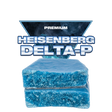
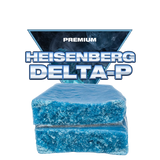
Heisenberg Delta-P 60%
Our highest-strength resin: a hash texture, not a butane extract, with the strength shown on the product page.
From6,50 €View product →
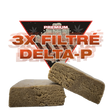
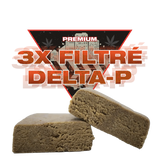
3X Filtré Delta-P 40%
A resin inspired by triple-filtered hash, dry and sandy to the touch, for anyone who likes crafted products.
From6,50 €View product →The definition
Shatter, a glass-like concentrate.
A cannabis flower is mostly plant matter. The cannabinoids and terpenes sit in the trichomes, the tiny resin glands that cover the buds. A concentrate means separating that resin from the rest. Shatter belongs to the family of solvent extracts, more precisely BHO, short for butane hash oil: the resin is dissolved in a hydrocarbon, then the solvent is removed.
What makes it recognisable is its texture. Where wax looks like candle wax and budder like butter, shatter forms a smooth, honey- or amber-coloured slab that snaps cleanly when bent cold. The Ontario Cannabis Store, Ontario's public cannabis retailer, describes it as a butane-based concentrate, evaporated at low temperature, that cools into a hard, translucent sheet.
How it's made
How shatter is made: solvent, purge, rest.
The principle comes in three steps. Butane, or a butane-propane blend, runs through the plant matter and carries the cannabinoids and terpenes with it. The result is a solvent-laden oil. It then has to be purged, meaning the remaining solvent is driven off, usually under vacuum and gentle heat. Finally, the extract cools and sets.
Extraction
The solvent dissolves the resin. In the legal North American industry, this is done in a closed loop, in premises equipped against the risk of explosion.
Purging
The residual solvent is evaporated, usually in a vacuum oven. A rushed purge leaves traces of solvent in the product.
Resting
If the oil isn't stirred, it sets into a glassy slab. If it's agitated, it crystallises and turns opaque.
That last step explains why the same extract can end up as shatter or as wax. Leafly's glossary sums up the difference as essentially cosmetic: it comes down to how much the molecules are agitated during production. Shatter is simply an extract that was left alone.
No home extraction. Butane is a heavy, highly flammable gas that pools on the floor and ignites at the slightest spark. DIY extractions have caused documented explosions and severe burns. And in France, making a THC cannabis extract counts as producing a controlled drug.
Shatter vs wax
Shatter vs wax, budder, rosin: what really changes.
Concentrate names describe a texture and a method first, not a quality. Here's how shatter compares with its cousins. For a full tour of extracts and dab gear, see our guide dabs, wax and cannabis concentrates.
| Shatter | Wax / budder | Live resin | Rosin | |
|---|---|---|---|---|
| Method | Solvent (butane) | Solvent (butane) | Solvent, fresh-frozen plant | Solventless: heat and pressure |
| Look | Glassy, brittle slab | Opaque, waxy or creamy | Often saucy, very aromatic | Amber, sticky |
| What creates the texture | Extract left to rest | Extract whipped or agitated | Fresh starting material | Pressing flowers or hash |
| Handling | Brittle when cold, sticky when warm | Scooped with a dab tool | Scooped with a dab tool | Scooped with a dab tool |
On strength, the OCS points out that shatter isn't always stronger than wax: from the same starting material, potency is comparable, and the choice is mostly down to preference. Rosin stands out because it uses no solvent; we cover it in what rosin is. The oldest solventless extracts, such as dry sift, are explained in our article on static hash and dry sift.
- "The clearer it is, the purer it is." Colour also depends on the starting plant and the process; it's not a measure of potency.
- "Shatter that goes soft is a failed batch." Heat, humidity or handling can make shatter crystallise into budder; it's a physical change, not proof of fraud.
- "Glassy, so solvent-free." The look tells you nothing about how well it was purged. Only a lab test can.
The data
Potency, solvents, burns: what's been measured.
Plenty of figures about concentrates circulate without a source. Here are the ones that come from public bodies or scientific journals. Full references at the bottom of the page.
Ontario Cannabis Store · shatter guide
The public retailer states that concentrates can contain up to 90% THC, versus about 30% for a flower, and says dabbing is for experienced users.
Journal of Toxicological Sciences · 2015
Across 57 concentrates from the Californian medical market, maximum THC ranged from 23.7% to 75.9% (excluding one CBD-rich sample). More than 80% of the samples were contaminated with residual solvents or pesticides.
Same study · transfer into the vapour
In inhalation tests, up to 40% of the theoretically available THC ended up in the vapour of a dab.
Journal of Medical Toxicology · 2015
At the University of Colorado burn centre, 29 patients burned while making BHO between 2008 and 2014, none before medical liberalisation. Median burned area: 10%; 21% had to be intubated.
These figures describe specific samples and hospitals, not every shatter in circulation. Yet they tell the same story: a highly concentrated product whose quality depends entirely on how it's made, and a production process that, done at home, sends people to A&E.
How it's used
Dab, vaporiser, joint: how it's consumed.
Shatter is mainly consumed as a dab: a small amount is placed on a very hot surface, the nail of a dab rig or the chamber of an e-rig, and the vapour is inhaled. It can also go into a vaporiser designed for concentrates. Some people add it to flower in a joint, which sharply increases the dose without them realising.
- The amount: the OCS advises starting with a dose smaller than a lentil. That tells you how far it is from a flower.
- The temperature: a surface that's too hot degrades terpenes and can form unwanted compounds, as research on dabbing has shown.
- Storage: somewhere cool, away from light and humidity, in silicone paper; heat softens it.
These pointers describe use as it exists where shatter is sold legally. In France, THC shatter remains a controlled drug, however it's consumed.
The risks
Why shatter is unforgiving.
- The dose. A dab packs into a few milligrams what a joint spreads over a whole session. The overdose risk is first of all simple arithmetic.
- Residues. A poorly purged extract can contain solvent; the Californian analyses found it in many samples.
- The illicit market. With no label or lab report, there's no knowing what a slab sold as "shatter" contains, including added synthetic cannabinoids.
- Tolerance. Regular use of very strong products quickly raises the threshold of what "works".
If you feel unwell, anxious or have palpitations after a concentrate, the priority is to settle somewhere calm, not stay alone, and call 112, or 15 (SAMU) in France, if the symptoms persist. And in every case: never before driving, adults only, and start low.
Legal or banned?
Shatter in France: it all comes down to THC.
French law doesn't care what a product is called, only what it contains. THC is a controlled drug; hemp products are only tolerated under 0.3% THC, under the decree of 30 December 2021. A classic shatter, at several tens of percent THC, is therefore a controlled drug in France, just like hashish or herbal cannabis.
Use
Since 20 August 2026, use in France can be punished with a €500 fixed criminal fine (€400 if paid early, €1,000 if paid late), recorded on your criminal record.
Production
Extracting a THC concentrate means producing a controlled drug: you're no longer in the realm of personal use.
Behind the wheel
Driving after using a controlled drug is punishable by 3 years in prison and a €9,000 fine (article L235-1 of the French Highway Code).
"CBD shatters" also exist. Their status depends on their THC content and the molecules actually present: an extract sold as CBD but spiked with HHC, THCP or H4-CBD contains substances classified as controlled drugs by the ANSM (the French medicines agency). Without a lab report, best to walk on by.
At Golden High
No shatter, but strong Delta-P resins.
Let's be clear: we don't sell shatter, wax or any dab concentrate. Our products belong to the Delta-P range, CBDX-based, under 0.3% THC and lab-tested. They take on the style of hashish, not the composition of a butane extract. The principle is explained in the Delta-P guide.
If it's the "strong" side of shatter that appeals to you, look at our high-strength resins: the Heisenberg Delta-P 60% is the most potent in the range, and the 3X Filtré Delta-P 40% recreates the dry texture of filtered hash. The full selection is in our strong CBD collection.
- Read the strength shown on the product page before choosing, not just the name.
- Check the lab report: every batch should be traceable to a laboratory certificate.
- Start small, leave time between doses, and never before getting behind the wheel.
Your questions
What people ask us about shatter.
What is shatter, exactly?
A cannabis concentrate made by solvent extraction, usually with butane, that sets into an amber, translucent, brittle slab. It concentrates the plant's cannabinoids, THC included, at levels far above those of a flower.
What's the difference between shatter and wax?
Mainly the texture. Both are usually butane extracts: shatter is left to rest and turns glassy, wax is agitated and turns opaque and waxy. From the same starting material, their potency is comparable.
How is shatter made?
A solvent such as butane dissolves the plant's resin, then the extract is purged, usually under vacuum, to remove the solvent, before cooling without being stirred. DIY extraction is dangerous: butane is explosive.
How much THC is in shatter?
A lot. The Ontario Cannabis Store talks of concentrates up to 90% THC; a 2015 study of 57 Californian concentrates measured 23.7% to 75.9%. The actual level depends on the material and the process.
Is shatter legal in France?
No, as long as it contains THC above the levels tolerated for hemp (0.3%). It's a controlled drug in France: use can be punished with a €500 fixed criminal fine since 20 August 2026.
How do you smoke shatter?
It's mostly dabbed, vaporised on a very hot surface, or used in a vaporiser for concentrates. Legal retailers abroad advise a dose smaller than a lentil and keep dabbing for experienced users. In France, it remains a controlled drug.
Why is my shatter turning soft or opaque?
Heat, humidity or handling can make the extract crystallise, giving it a budder texture. It's a physical change that tells you nothing about potency or purge quality.
Does Golden High sell shatter?
No. We sell flowers and resins from the Delta-P range, CBDX-based, under 0.3% THC and lab-tested, not dab concentrates.
Sources
The references cited in this article.
- Ontario Cannabis Store. What Is Shatter? Cannabis Concentrates.
- Raber J., Elzinga S., Kaplan C. (2015). Journal of Toxicological Sciences, 40(6). Understanding dabs: contamination concerns of cannabis concentrates and cannabinoid transfer during the act of dabbing.
- Journal of Medical Toxicology (2015). Butane Hash Oil Burns Associated with Marijuana Liberalization in Colorado.
- ACS Omega (2017). Toxicant Formation in Dabbing: The Terpene Story.
- Leafly. Shatter — Cannabis glossary.
- Légifrance. Decree of 30 December 2021 applying article R. 5132-86 of the French Public Health Code (in French).
- Légifrance. French Highway Code, article L235-1 (in French).
Keep reading