

What Is CBC? Cannabichromene, the Cannabinoid in the Shadows
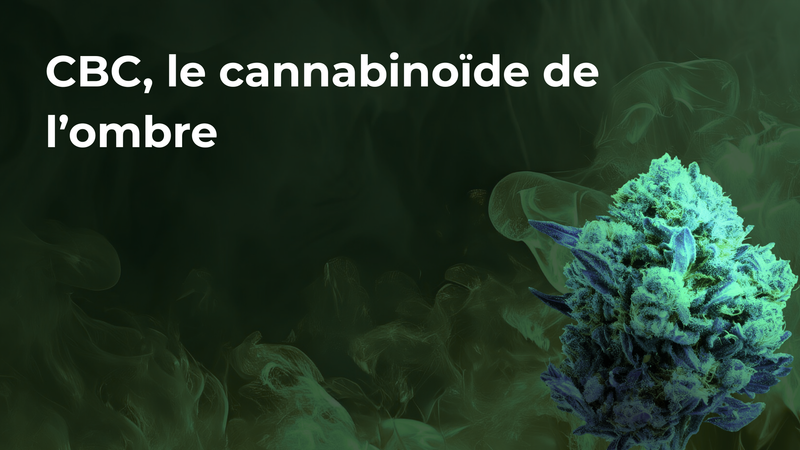
CBC, the cannabinoid working in the shadows
When people talk about cannabis, the same names always come up: THC, CBD, sometimes CBG.
Yet in the shadows, some cannabinoids play a key role without ever getting the spotlight.
And CBC, or cannabichromene, is clearly one of them.
Little known to the general public and rarely consumed on its own, CBC mostly works behind the scenes. It doesn’t get you high and isn’t out to impress, but it has a real say in how the other cannabinoids express themselves.
So what does CBC actually do?And why is it catching the eye of more and more fans of full-spectrum profiles? Let’s break it down.
Contents
-
What exactly is CBC?
-
Why it’s called a “minor” cannabinoid
-
Does CBC get you high?
-
How CBC works in the body
-
CBC and the entourage effect
-
What effects are associated with CBC?
-
Where is CBC found?
-
FAQ – Frequently asked questions about CBC
What exactly is CBC?
Put simply, CBC (cannabichromene) is a cannabinoid naturally found in cannabis.
It was identified in the 1960s, around the same time as several of the plant’s other major compounds.
It’s often described as a minor cannabinoid, not because it’s insignificant, but simply because it’s present in smaller amounts than THC or CBD in most strains.
Less abundant, but far from useless.
Why is CBC considered “minor”?
In a typical flower, CBC generally accounts for:
● a fraction of the total cannabinoid percentage,
● rarely dominant on its own,
● yet almost always present in full profiles.
It’s precisely this low-key presence that makes it interesting:
CBC rarely works solo, but it shifts the overall balance of the product.
Does CBC get you high?
No.
CBC isn’t psychoactive.
It doesn’t cause a “high”, doesn’t directly stimulate the receptors behind intoxicating effects, and doesn’t alter perception the way THC does.
What it can do, though, is influence how the other cannabinoids are felt.
How does CBC work in the body?
👉 CBC interacts with the endocannabinoid system, but not in the same way as psychoactive cannabinoids.
It binds only very weakly to CB1 receptors, the ones involved in the high. Instead, it acts more on:
-
the receptors known as CB2, which research links to immune balance,
-
certain receptors studied for their part in how the body perceives inflammation and pain (such as TRPV1)
This indirect interaction is what gives it the role of a modulator, rather than a lead actor.
CBC and the entourage effect: its real role
CBC really makes sense within what’s known as the entourage effect.The principle rests on a simple idea:
cannabinoids seem to work better together than apart.
In that context, CBC:
-
isn’t trying to dominate,
-
but to reinforce or balance the action of the other compounds,
-
THC and CBD in particular.
That’s why you mostly find it in:
-
full-spectrum extracts,
-
profiles rich in secondary cannabinoids,
-
products designed for overall balance rather than raw power.
What effects are generally associated with CBC?
Careful:
we’re talking here about observed potential and user feedback, not medical promises.
What early research and user feedback most often mention about CBC:
-
a possible link with the body’s inflammatory response, studied only in the lab so far,
-
a reported sense of physical ease,
-
a possible feeling of steadier mood, according to some users,
-
an indirect effect on the overall synergy of the product.
Taken on its own, CBC is discreet.
As part of a whole, it can make a difference.Where is CBC found?
CBC is rarely isolated to be consumed by itself. You’ll mainly find it:
-
in certain natural strains,
-
in full-spectrum extracts,
-
in technical formulations where balance is the goal.
It’s also more present in certain specific genetics, often from warmer climates.
FAQ
Is CBC legal?In France, CBC is sold when it comes from compliant hemp and is part of products that meet the regulations in force there (less than 0.3% THC). Rules differ from one country to another, so check the law where you live.
Can you consume CBC on its own?
You can, but that’s not where it’s most interesting. Its main appeal remains synergy.
CBC or CBD: which one should you choose?
They don’t play the same role. CBD acts directly, while CBC mostly works in support. Is it useful for a smoker?
Yes, especially if you’re into full profiles and balanced effects rather than raw sensations.
Key takeaways
In short, CBC is neither a trendy cannabinoid nor a “wow” product.
It’s a balancing component, discreet but essential, that contributes to the richness and the
coherence of cannabis.
If you’re into well-built products, full spectrums and the entourage effect, CBC is clearly worth a closer look.