

Indian hemp: meaning, history and how it differs from hemp

By the Golden High teamUpdated 24 November 202610 min read
Cannabis history
Indian hemp is the old name for cannabis grown for its psychoactive effects, the plant that gives us herbal cannabis and hashish. Botanically, it's the same species as field hemp, Cannabis sativa: what separates them is mainly THC content, a controlled drug in France above the traces tolerated under 0.3%. Here's where the term comes from, what Lamarck described in 1785, what Baudelaire and his friends really took, and what French law says in 2026.

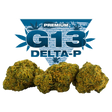
Amnesia Delta-P 12%
A hemp flower with a lemony profile, a Delta-P version of a great classic, with a moderate strength shown on the product page.
From4,90 €View product →
Marocain Hash 30%
A Moroccan-style resin, spicy and earthy, a nod to historic hashish, in a lab-tested Delta-P version.
From6,50 €View product →The definition
Indian hemp is cannabis.
Open the dictionary of the Académie française or Le Robert: "chanvre indien" (Indian hemp) refers there to the variety of hemp from which psychoactive preparations are made, and the word "cannabis" is defined… as Indian hemp. The two terms are synonyms. The Larousse medical dictionary also presents cannabis as a substance extracted from Indian hemp, consumed as hashish or marijuana. English dictionaries say much the same.
The adjective "Indian" is no mystery. In the 18th century, Europeans had always known the fibre hemp of their countryside, used for rope and sails. The plants brought back from India, though, were smaller, more resinous and reputed to be intoxicating. So they were named after where they came from: hemp from the Indies, then Indian hemp.
- Synonyms: cannabis, hemp from the Indies, and in everyday language herb, weed or ganja.
- Historic scientific name: Cannabis indica Lamarck, 1785.
- Botanical name accepted today: Cannabis sativa L., a single species.
- Status in France: controlled drug, except hemp under 0.3% THC.
The term has aged. You mostly come across it in 19th-century texts, literature, old pharmacy manuals and dictionaries. In everyday life, "cannabis" has replaced it.
The botany
Linnaeus in 1753, Lamarck in 1785.
In 1753, the Swedish naturalist Carl Linnaeus named the plant Cannabis sativa, "cultivated hemp". He had European field hemp in mind. Thirty years later, the Frenchman Jean-Baptiste de Lamarck received specimens brought back from India by the explorer Pierre Sonnerat, probably collected near Pondicherry. He found them different enough to describe a second species in his Encyclopédie méthodique: Cannabis indica.
Cannabis sativa L. (1753)
The plant Linnaeus described from European hemp: tall, little branched, grown for fibre and seed. That's textile hemp.
Cannabis indica Lam. (1785)
The plant Lamarck described from Indian specimens: shorter, more branched, richer in resin, known for its effects. That's Indian hemp.
This split into two species didn't hold. The Royal Botanic Gardens, Kew, the reference for plant nomenclature, recognise only one species, Cannabis sativa L., and list Cannabis indica Lam. among its synonyms. Some botanists still speak of an indica subspecies or variety, but without questioning the unity of the species.
What separates a farm hemp plant from a cannabis plant, then, is less botany than selection: centuries of growing for fibre on one side, for resin on the other. We also explain this in our article on the cannabis leaf, which everyone recognises but few really know how to read.
Textile or Indian?
One plant, two uses.
It's the question that comes up most: the hemp you see growing in Champagne or Normandy, is it cannabis? Yes and no. It's the same species, but not the same varieties. Agricultural seeds are certified and selected to produce almost no THC.
| Indian hemp (cannabis) | Industrial hemp | |
|---|---|---|
| Species | Cannabis sativa L. (formerly C. indica) | Cannabis sativa L. |
| Selected for | Resin and its cannabinoids | Fibre, seed, hurd |
| THC content | High, variable | Under 0.3%, certified varieties |
| Part harvested | Female flowers, resin | Straw, seeds (hempseed) |
| Status in France | Controlled drug | Growing authorised and regulated |
| Uses | Herbal cannabis, hashish | Textiles, hempcrete, insulation, oil, animal bedding |
France is Europe's leading producer of industrial hemp. According to FranceAgriMer's sector sheet, it grew 22,600 hectares in 2024, with around 1,550 growers, and only varieties containing less than 0.3% THC are authorised. The straw ends up as insulation, hempcrete or animal bedding, the seed as oil or animal feed.
In between, there are the hemp flowers sold in shops: they come from low-THC varieties but are grown for their flowers. That's the case for the Delta-P flowers in our flower collection, all under 0.3% THC and lab-tested.
A French story
From Cairo to the Île Saint-Louis, Indian hemp in France.
Indian hemp entered the French imagination through the Orient. Soldiers on the Egyptian campaign discovered hashish, and the army ended up banning it. Forty years later, in Paris, it became an object of medical study and literary experiment.
October 1800
In Egypt, an order of the day attributed to General Menou bans soldiers from the intoxicating drink made from "the herb called hashish" and from smoking hemp seed, according to the Fondation Napoléon.
1844
At the Hôtel Pimodan (now the Hôtel de Lauzun), on the Île Saint-Louis, the Club des Hashischins meets around the psychiatrist Jacques-Joseph Moreau de Tours.
1845
Moreau de Tours publishes Du hachisch et de l'aliénation mentale (Hashish and mental illness), describing the effects observed on himself and the participants.
1846
Théophile Gautier describes a session in "Le Club des Hachichins", published in the Revue des Deux Mondes.
1860
Charles Baudelaire publishes Les Paradis artificiels (Artificial Paradises), whose first part, "The Poem of Hashish", draws heavily on Moreau's observations.
A detail often forgotten: at the club, nobody smoked. They swallowed dawamesk, a greenish paste of cannabis resin mixed with fat, honey and pistachios. The effects, slow to arrive and hard to dose, explain many of Gautier's wild accounts. To understand what that hashish was and how it's made, read our guide what hash is.
What the sources say
The facts, not the legend.
Plenty of misconceptions surround Indian hemp, often copied from one site to the next. Here are the landmarks that hold up when you go back to the sources.
Kew · plant nomenclature
One accepted species, Cannabis sativa L. The name Cannabis indica Lam. is treated as a synonym.
PhytoKeys · 2020 taxonomic revision
The revision published by McPartland and Small notes that Lamarck's specimens came from India, collected by Pierre Sonnerat, probably near Pondicherry between 1775 and 1778.
Nature Plants · 2021
Analysing more than 100 commercial samples, Watts's team shows that products labelled "indica" and "sativa" are genetically indistinguishable at genome scale. The label mostly tracks a few terpenes.
FranceAgriMer · 2026 sector sheet
22,600 ha of industrial hemp in France in 2024, 1,550 growers, only certified varieties under 0.3% THC.
Above all, remember the third point: when a shop or seed bank promises you a relaxing "indica" effect, it's talking about a commercial reputation, not a reliable botanical category. We dug into this in sativa, indica, hybrid: do they still mean anything?. References at the bottom of the page.
Legal or banned?
A controlled drug in France, except under 0.3% THC.
Indian hemp, in the sense of THC-rich cannabis, is a controlled drug in France. Use has been an offence since the law of 12 July 1916, cannabis joined the controlled substances with the 1925 Geneva Convention, and the law of 31 December 1970 still underpins the penalties for use today.
Key point: the 2020 UN vote did not legalise cannabis. In France, a herb or resin that exceeds the tolerated traces of THC remains a controlled drug, whatever you call it, "Indian hemp" included.
For a full rundown of what's allowed today, see our guide to legal weed in France.
And today?
From Indian hemp to lab-tested hemp.
The Romantics' hashish arrived from Egypt or India with no indication of strength. Moreau de Tours himself noted how much the effects varied from one dose to the next. Two centuries later, the problem hasn't gone away on the illegal market: a product with no lab report is still a lottery.
Golden High did the opposite: flowers and resins from hemp under 0.3% THC, with a displayed strength and a certificate of analysis for every batch. The details of our molecule are on our Delta-P page. For flower, the Amnesia Delta-P 12% is our most requested product. For resin, the Marocain Hash 30% takes on the style of Rif hashish. These are Delta-P versions of an aroma profile, not THC Indian hemp.
Read the label
The cannabinoid content and the THC content, under 0.3%, must be shown.
Ask for the lab report
A third-party lab certificate for every batch, available before you buy.
Start low
Small amount, time between doses, adults only. Never before driving.
Your questions
What people ask us about Indian hemp.
Is Indian hemp a drug?
Yes, in the everyday sense: Indian hemp is the old name for THC-rich cannabis, classified as a controlled drug in France. Farm hemp, under 0.3% THC, isn't.
What's the difference between hemp and Indian hemp?
It's the same species, Cannabis sativa. Industrial hemp comes from certified varieties under 0.3% THC, grown for fibre and seed; Indian hemp refers to plants selected for their psychoactive resin.
Are Indian hemp and cannabis the same thing?
Yes. Dictionaries (Académie française, Le Robert) treat the two words as synonyms. "Indian hemp" is simply the old name, widely used in the 19th century.
What is Cannabis indica?
It's the name Lamarck gave in 1785 to cannabis plants from India. Botanists now consider it a synonym of Cannabis sativa; in retail, "indica" has become a style label with no reliable genetic value.
Is Indian hemp legal in France?
No, if it contains THC above the tolerated traces: it's a controlled drug. Use is punishable by a year in prison and a €3,750 fine, or a €500 fixed fine since 20 August 2026.
Why is it called Indian hemp?
Because the intoxicating plants Europeans knew in the 18th century came from India, while European hemp was used for fibre. They were named after where they came from.
Did Baudelaire smoke Indian hemp?
Not exactly: at the Club des Hashischins, people swallowed dawamesk, a paste of cannabis resin with honey and pistachios. Baudelaire drew on it for "The Poem of Hashish", published in 1860 in Les Paradis artificiels.
Sources
The references cited in this article.
- Royal Botanic Gardens, Kew. Plants of the World Online — Cannabis sativa L..
- McPartland J.M., Small E. (2020). PhytoKeys 144. A classification of endangered high-THC cannabis (Cannabis sativa subsp. indica) domesticates and their wild relatives.
- Watts S. et al. (2021). Nature Plants 7. Cannabis labelling is associated with genetic variation in terpene synthase genes.
- FranceAgriMer (2026). Hemp sector sheet 2026 (in French).
- Dictionary of the Académie française, 9th edition. Chanvre (in French).
- Fondation Napoléon. Bonaparte, a pioneer in the fight against drugs? (in French).
- Obradovic I. (2015). La Vie des idées. Cannabis in France: state of play and public responses (in French).
Keep reading