

Bruce Banner strain: genetics, aromas and effects of the “Hulk” weed

By the Golden High teamUpdated 24 October 20268 min read
Strains
The Bruce Banner strain is a hybrid bred in Colorado by Dark Horse Genetics from a cross between OG Kush and Strawberry Diesel. It owes its legend to the 2013 Denver Cannabis Cup, where it tested at 28.35% THC, a figure unheard of at the time, and its name to the Hulk's alter ego. Here's where it comes from, what we really know about its aromas and effects, and what our Bruce Banner Delta-P actually is.

Bruce Banner Delta-P 25 %
Compact, resinous buds, a fruity bouquet with a hint of diesel and a slightly sweet finish.
From7,90 €View product →
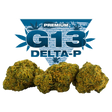
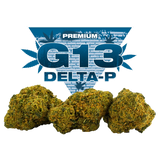
G-13 Delta-P 30 %
Another strain with a reputation for power, in a Delta-P version, with an even higher level.
From6,90 €View product →The ID card
The Bruce Banner strain, a Colorado hybrid.
Bruce Banner is one of those strains whose name travels far beyond grower circles. It was born in late-2000s Colorado, just as the state was opening its medical cannabis programme, and it made its mark with one simple selling point: its strength.
These markers come from the breeder's published listings and the big strain databases. They describe the original, THC-rich genetics: our flower borrows its name and aromatic profile, in a Delta-P version.
The story
A teenage nickname that became a legend.
The name isn't a marketing stunt. Its creator, Jason Holck, told the newspaper Westword that his nicknames as a teenager were “Hulk” or “Incredible Hulk”: he named the strain he bred during his studies after the scientist who turns into a green giant. The reference fits the plant's reputation: unassuming on the outside, explosive once you try it.
2008
Jason Holck moves back to Colorado and opens one of the state's first medical dispensaries, in Denver. Bruce Banner draws queues out the door.
After 2010
A new law regulates the market; Holck loses the business he had launched, steps away, then returns with Dark Horse Genetics.
2013
At the Denver Cannabis Cup run by High Times, Bruce Banner is billed as “the strongest weed in the world” at 28.35% THC.
Since then
Dark Horse builds on that title to launch a growing business and sells its seeds to distributors in Europe and Canada.
A level measured at a contest reflects one specific sample, not an average. Leafly, which pools broader data, puts the strain at around 21% THC: still high, but a long way from the record.
The genetics
OG Kush × Strawberry Diesel, where fuel meets fruit.
OG Kush
One of the most famous Californian lines: dense buds and a smell of fuel, pine and earth. It gives Bruce Banner its structure and its “fuel” side.
Strawberry Diesel
As the name suggests, a hybrid that pairs a fruity, strawberry-like side with the gasoline notes of the Diesel lines. It brings sweetness and a livelier edge.
One small caveat: in his 2025 interview, the breeder names Coal Creek Kush as the strain's mother, whereas seed banks and databases list OG Kush. Both versions coexist, which is common for genetics born in the dispensary scene before everything was documented.
Dark Horse selected five phenotypes, numbered 1 to 5. The most widespread is Bruce Banner #3, often shortened to BB3: it's the one most often behind the name “Bruce Banner 3”. A phenotype is the concrete expression of a genetic line: two seeds from the same cross can produce plants that differ in size, yield, smell or cannabinoid levels. The breeder keeps the best ones and reproduces them from cuttings to lock in their traits.
That's also why two “Bruce Banner” bought in two different places may look nothing alike: the name travels more easily than the plant. A famous strain attracts copies, rough crosses and opportunistic labels. The big database listings remain the best starting point, but they describe a reference genetic line, not every batch sold under that name.
Nose and taste
Diesel, flowers and sugar: the aroma profile.
The descriptions line up: a gasoline smell inherited from the Diesel lines, softened by sweet notes, with floral and tea touches according to Leafly. The breeder himself talks about a “diesel aroma with sweet undertones”.
- Caryophyllene: the dominant terpene, with peppery, spicy notes.
- Myrcene: earthy, musky notes, very common in cannabis.
- Limonene: the citrus touch that brightens the whole thing.
- On the palate: floral, tea, diesel, with a sweet finish.
Terpenes don't just shape the scent: they play a part in how a strain is perceived. We explain it all in terpenes, the secret behind taste and effects.
What the sources say
Effects that are reported, not guaranteed.
There's no scientific study on Bruce Banner specifically. What you read about its effects comes from user reports compiled by strain databases. It's a reputation, useful for getting an idea, not a promise: the same strain can feel very different depending on the person, the amount and the setting.
Leafly · strain page
Users mostly mention euphoria, creativity and focus, and describe a rather energising strain that is also said to relax the body. Most reported side effects: dry mouth, anxiety, dry eyes.
Weedmaps · Bruce Banner #3 page
Reviews highlight a happy mood, giggles and relaxation, along with woody, earthy aromas.
Seedfinder · breeder listing
The strain is described there as indica-dominant in structure, with sativa-type effects: a good example of the limits of indica / sativa labels.
Westword · 2025
The Denver paper looks back at the 2013 title: 28.35% THC, a figure “unheard of at the time”.
These discrepancies aren't mistakes: they show that the indica, sativa and hybrid categories do a poor job of describing real effects. We cover this in sativa, indica, hybrid: do they still mean anything? References at the bottom of the page.
One last point that often gets forgotten: a record level is no guarantee of a better experience. The more concentrated a flower is, the thinner the line between “nice” and “too much”, and the more likely the side effects mentioned above (anxiety, dry mouth) become. Bruce Banner's reputation for strength is exactly why you should take it slowly.
The Golden High version
Bruce Banner in a Delta-P version.
The original Bruce Banner is a THC-rich strain: in France, it falls under narcotics law. Our Bruce Banner Delta-P 25 % isn't a copy of it: it's a flower from the Delta-P range, made with CBDX, under 0.3% THC and lab-tested, that captures the aromatic spirit of the strain.
| Original Bruce Banner | Bruce Banner Delta-P | |
|---|---|---|
| Genetics / profile | OG Kush × Strawberry Diesel | Fruity profile, hint of diesel, sweet finish |
| Headline molecule | THC (28.35% in 2013) | Delta-P at 25%, under 0.3% THC |
| Status in France | Controlled drug | Sold in our shop, lab-tested |
| Look | Dense, sticky buds | Compact, resinous buds |
If you're after another strain with a muscular reputation, G-13 Delta-P 30 % is the most intense of our flowers; its story is told in our article on G13. The whole range is in the Delta-P flowers collection.
Smell it first
Open the bag and take the time to pick out the fruity notes and the hint of diesel: that's the signature of the Bruce Banner profile.
Grind it finely
Compact, resinous buds grind better in a grinder than by hand: they'll burn more evenly.
Start small
At 25%, start with less than usual and wait until you know how you feel before going further.
Store it well
In an airtight jar, away from light and heat, to keep its terpenes for as long as possible.
Still torn between several profiles? Our guide which Delta-P flower to choose helps you decide based on the taste and intensity you're looking for.
Harm reduction: 25% is a high level in our range. Start with a small amount, give it time before having more, and never get behind the wheel afterwards. Adults only.
Your questions
What people ask us about Bruce Banner.
What is the Bruce Banner strain?
A hybrid strain bred in Colorado by Dark Horse Genetics from an OG Kush × Strawberry Diesel cross. It's known for testing at 28.35% THC at the 2013 Denver Cannabis Cup.
Why is it called Bruce Banner?
Bruce Banner is the scientist who turns into the Hulk. The strain's creator, Jason Holck, was himself nicknamed “Hulk” when he was young.
What is Bruce Banner 3?
It's phenotype no. 3, one of the five selected by Dark Horse Genetics, and the most widespread. You'll also find it under the name BB3.
What are the effects of Bruce Banner?
Users mainly report euphoria, creativity and body relaxation, sometimes with anxiety, dry mouth and dry eyes. These are reputations, not guarantees: everyone reacts differently.
How much THC does Bruce Banner have?
The 2013 record is 28.35%, but that's a contest sample. Leafly puts the strain at around 21% THC on average.
Is Bruce Banner legal in France?
The original, THC-rich strain falls under narcotics law in France. Our Bruce Banner Delta-P is a flower from the Delta-P range, under 0.3% THC and lab-tested.
What's the difference with Bruce Banner Delta-P?
Our version borrows the strain's name and aromatic spirit, but it's a flower from the Delta-P range, made with CBDX, with a Delta-P level of 25% shown on the product page.
Sources
The references cited in this article.
- Westword (2025). Marijuana Breeder Dark Horse Genetics Has a Dispensary for Growers.
- Leafly. Bruce Banner strain information.
- SeedFinder. Bruce Banner (Dark Horse Genetics) — Cannabis Strain Info.
- Weedmaps. Bruce Banner #3 (aka BB3) Weed Strain Information.