

Legal cannabis glossary: CBDX, hash, Delta-P
This glossary brings together the words you come across in shops, on forums and on labels: molecules (CBD, HHC, THCP, CBDX), resins (Piatella, 3X Filtered, Jaune Mousseux), effects and French regulations. It is meant for curious adults who want to understand what they are reading before they buy, and for anyone looking for a short, verifiable definition. Each term is explained in a few sentences, with its legal status in France and the date of the decision where one exists, and links to a more detailed article.
Updated October 20, 2026
Molecules and cannabinoids
- Delta-P (Delta P, Delta-P range)
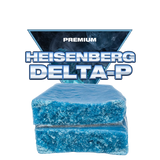
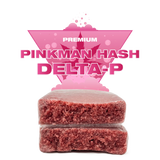
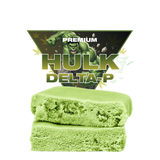
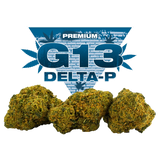
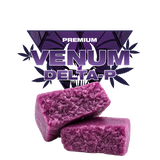
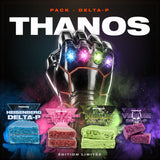
- Delta-P is a trade name: it is the name of Golden High's range of flowers, resins and pods, not the name of a molecule. According to Golden High, Delta-P is based on CBDX. Every product in the range contains less than 0.3% THC and is laboratory-tested. Delta-P has nothing to do with THCP, which is classified as a narcotic in France. Read more →
- CBDX (CBD-X)
- CBDX is the trade name Golden High gives to the active molecule in its Delta-P range. According to the brand, its effect is stronger than that of CBD. It is not an official chemical name: no scientific publication describes a molecule under this name. The CBDX products sold by Golden High contain less than 0.3% THC and are laboratory-tested. Read more →
- NL3 (NL-3)
- NL3 is a trade name for a neo-cannabinoid, presented by those who sell it as an evolution of NL-1. According to Golden High, NL3 is a form of CBDX, the molecule in its Delta-P range. Its exact composition has not been published and no independent study describes its structure or effects: what is known about it comes from consumer feedback. Read more →
- THX+ (THX, THX plus)
- THX+ is a trade name for a neo-cannabinoid, presented as derived from hemp and sold in France in products containing less than 0.3% THC. Its exact composition has not been published and no study describes its effects. Consumers describe it as noticeably stronger than CBD; these experiences vary from one person to another. Read more →
- HE+ (High Effect, HE plus)
- HE+ (for "High Effect") is a trade name that does not refer to a single molecule, but to a category of CBD products enriched or modified to produce a more noticeable perceived effect. Depending on the product, the term covers extracts concentrated in minor cannabinoids or formulations based on modified CBD. Only a laboratory analysis of the batch shows what it actually contains. Read more →
- Neo-cannabinoid (new cannabinoid, semi-synthetic cannabinoid)
- A neo-cannabinoid is a recent cannabinoid molecule, usually produced in a laboratory from CBD extracted from hemp (a process called semi-synthesis), then added to flowers, resins or liquids. Many are sold under trade names with no published formula. In France, several have been classified as narcotics by the ANSM, such as HHC in 2023, then THCP and H4-CBD in 2024. Read more →
- CBD (cannabidiol)
- CBD (cannabidiol) is a cannabinoid naturally present in hemp that does not produce the high associated with THC. On 19 November 2020, the Court of Justice of the European Union ruled (Kanavape judgment) that CBD is not a narcotic. In France, hemp products containing CBD are permitted if they contain less than 0.3% THC. Read more →
- THC (delta-9-THC, delta-9, Δ9-THC, tetrahydrocannabinol)
- THC (delta-9-tetrahydrocannabinol) is the main psychoactive cannabinoid in cannabis, responsible for the high. In France it is a narcotic: its production, sale and use are prohibited. Hemp products are only tolerated if they contain less than 0.3% THC (order of 30 December 2021). Delta-9 is the form of THC meant when people simply say "THC". Read more →
- Delta-8-THC (delta-8, Δ8-THC)
- Delta-8-THC is an isomer of THC: a molecule with the same formula but with one double bond in a different position. It occurs in very small amounts in the plant and is usually made in a laboratory from CBD. Its effects are described as close to those of THC, but less intense. Being a form of THC, it falls outside the legal framework in France.
- HHC (hexahydrocannabinol)
- HHC (hexahydrocannabinol) is a hydrogenated version of THC, made in a laboratory and long sold in shops as a legal alternative to cannabis. The ANSM classified it as a narcotic by a decision of 12 June 2023: its production, sale and use have been prohibited in France since 13 June 2023, because of a risk of abuse and dependence judged equivalent to that of cannabis. Read more →
- HHC-P (HHCP, hexahydrocannabiphorol)
- HHC-P (hexahydrocannabiphorol) is a derivative of HHC with a longer side chain, made in a laboratory and presented as more potent. It was classified as a narcotic at the same time as HHC by the ANSM decision of 12 June 2023: its production, sale and use have been prohibited in France since 13 June 2023. Read more →
- HHC-O (HHCO, HHC acetate, HHC-O-acetate)
- HHC-O (or HHCO, HHC acetate) is an acetylated form of HHC, made in a laboratory. It was classified as a narcotic by the ANSM decision of 12 June 2023, at the same time as HHC and HHC-P: its production, sale and use have been prohibited in France since 13 June 2023. It is also among the cannabinoids listed by the decision of 22 May 2024. Read more →
- THCP (tetrahydrocannabiphorol, Δ9-THCP)
- THCP (tetrahydrocannabiphorol) is a cannabinoid identified in cannabis by Italian researchers in 2019 (Citti et al., Scientific Reports). Its structure is that of THC with a seven-carbon side chain instead of five. In France, it is classified as a narcotic by an ANSM decision in force since 3 June 2024. It should not be confused with Delta-P. Read more →
- THCA (tetrahydrocannabinolic acid, THC-A)
- THCA (tetrahydrocannabinolic acid) is the acid form in which THC exists in the living plant. It is not psychoactive as such, but turns into THC when heated, for example when smoked. The ANSM classified it as a narcotic by a decision in force since 3 June 2024, excluding only its natural traces in hemp: a "THCA flower" is not a legal product in France. Read more →
- H4-CBD (H4CBD, tetrahydrocannabidiol, H4-cannabidiol)
- H4-CBD (tetrahydrocannabidiol) is CBD hydrogenated in a laboratory, sold for a time as flowers, resins and vapes. It is listed by name as a narcotic by the ANSM decision of 22 May 2024, in force since 3 June 2024, as is H2-CBD. Its production, sale and use are prohibited in France. Read more →
- 10-OH-HHC (10-hydroxy-HHC, 10-hydroxy-hexahydrocannabinol)
- 10-OH-HHC is a derivative of HHC with an added hydroxyl group, which appeared in shops after HHC was banned in 2023. No human study has been published on this molecule. To our knowledge it is not named by the ANSM, but the 2024 decision covers the entire chemical family it is very close to: this does not amount to authorisation. Read more →
- THV-N10 (THV N10, THVN10)
- THV-N10 is a trade name for a laboratory-made neo-cannabinoid that appeared in French CBD shops in late 2024 in flowers, resins and vapes. Its formula has never been published and no scientific study describes it under this name. To our knowledge it is not named by the ANSM, which does not amount to authorisation, since the 2024 classification covers an entire family. Read more →
- NL-1 (NL1)
- NL-1 (or NL1) is a trade name for a laboratory-made neo-cannabinoid, found in French shops since at least spring 2025. Its formula has never been published, no study describes it and sellers give contradictory descriptions of it. To our knowledge it is not named by the ANSM, which does not amount to authorisation. Read more →
- CBG (cannabigerol)
- CBG (cannabigerol) is a cannabinoid naturally present in hemp, generally in small amounts. Its acid form, CBGA, is the precursor from which the plant makes THCA, CBDA and CBCA, hence its nickname of "mother cannabinoid". It does not produce the high associated with THC and is found in some hemp flowers and oils.
- CBN (cannabinol)
- CBN (cannabinol) is a cannabinoid that forms mainly when THC oxidises, for example when a flower ages or is exposed to light and air. It is present in small amounts in dried cannabis and its psychoactive effects are described as much weaker than those of THC. It was the first cannabinoid to be isolated, at the end of the 19th century.
- CBC (cannabichromene)
- CBC (cannabichromene) is a cannabinoid naturally present in hemp which, like THC and CBD, derives from CBGA. It is often described as a cannabinoid in the shadows, because it is present in small amounts and far less studied than CBD. It does not produce the high associated with THC. Read more →
- CBDV (cannabidivarin)
- CBDV (cannabidivarin) is a natural cannabinoid closely related to CBD, from which it differs by a side chain shorter by two carbons. It is found mainly in certain hemp varieties, in small amounts. It does not produce the high associated with THC and remains rare on the market, for lack of varieties rich in CBDV. Read more →
Resins and extractions
- Hash (hashish, resin, cannabis resin, shit)
- Hash (hashish or resin) is cannabis resin: the trichomes of female flowers, separated from the plant material and then pressed into a slab or ball. Hash containing THC is a narcotic in France; seized resin there averaged 29.6% THC in 2024 according to the OFDT. Golden High's Delta-P resins contain less than 0.3% THC. Read more →
- Trichomes (resin glands, pollen)
- Trichomes are the tiny hair-shaped glands that cover cannabis flowers and give them their frosty look. Their heads contain most of the plant's cannabinoids and terpenes. All resins (kief, dry sift, bubble hash, Piatella) rely on separating these trichomes from the plant material.
- Kief (kif, grinder pollen)
- Kief is the fine golden powder made of trichomes detached from dried flowers, the kind that builds up at the bottom of a grinder fitted with a screen. It is the raw material of traditional hashish: once pressed, it becomes hash. Its name comes from the Arabic word kayf, which suggests well-being and pleasure. Read more →
- Dry sift (dry sifting, sifted hash)
- Dry sift is a hash obtained by dry-sieving the dried plant through increasingly fine screens, measured in microns, to collect the trichomes. The labels "x1", "x2" or "x3" generally indicate the number of sifting passes. The more the powder is sifted, the lighter it is and the less plant material it contains. Read more →
- Static hash (static, static sift)
- Static hash is a dry sift refined using static electricity: a charged surface is brought close to the sifted powder, attracting the trichome heads and leaving the plant material behind. The result is a lighter, purer powder than classic sifting, often sold pressed or loose. Read more →
- 3X Filtered (3X, triple filtered, 3X Filtré)
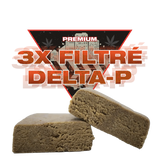
- 3X Filtered is a hash whose resin powder has been sifted three times, through increasingly fine screens, to remove as much plant material as possible before pressing. It is neither a molecule nor a strain, but a filtration grade that no official standard regulates. Golden High offers a Delta-P version. Read more →
- Bubble hash (Ice-o-lator, ice hash, ice water hash)
- Bubble hash, also called Ice-o-lator, is a hash obtained by stirring the plant in ice-cold water to make the trichomes brittle and detach them, then filtering the mixture through bags with increasingly fine mesh. Ice-o-lator was originally the brand name of these filter bags. The method uses no chemical solvent. Read more →
- Frozen hash (Frozen, fresh frozen)
- Frozen hash, or Frozen, is an ice-water hash made from plants frozen right after harvest, then filtered through bags with increasingly fine mesh. Freezing preserves the terpenes and makes the trichomes easier to detach. It is not a molecule: if it contains THC, it is a narcotic like any other hash. Read more →
- Piatella (Piattella, creamy hash, White Piatella)
- Piatella is a hash with a creamy, almost buttery texture, obtained by cold-curing a bubble hash made from fresh-frozen plants for several weeks. Born in Barcelona, it takes its name from the Italian piatto ("flat"), referring to its shape during curing. It is neither a molecule nor an extraction method, but a curing technique. Read more →
- Jaune Mousseux (Jaune, Mousseux, foamy yellow hash)
- Jaune Mousseux (French for "foamy yellow") is a style of pale-yellow to golden hash with an airy, crumbly, almost foamy texture, obtained by dry sifting a resin that is then pressed very lightly. It is neither a strain nor a molecule, and it has no official definition. Golden High offers a Delta-P version containing less than 0.3% THC. Read more →
- Rosin (live rosin, hash rosin, flower rosin)
- Rosin is a concentrate obtained using only heat and pressure: flower, kief or hash is pressed between two heated plates and the resin flows out, without butane, alcohol or any solvent. Popularised around 2015, the technique has become the benchmark for so-called solventless extractions. A distinction is made between flower rosin, hash rosin and live rosin. Read more →
- Moon rock (moonrock, moon rocks)
- A moon rock is a cannabis bud dipped in an oily concentrate and then rolled in kief, making it a far more loaded product than a classic flower. It originated in the United States and was popularised by the Californian rapper Kurupt. Golden High offers a Delta-P version containing less than 0.3% THC. Read more →
- Concentrate (dab, wax, shatter, extract)
- A concentrate is a product in which the plant's cannabinoids and terpenes have been separated from the plant material to reach a much higher content than a flower: hash, rosin, wax, shatter or oil. A "dab" refers to consuming a concentrate vaporised on a very hot surface. Some concentrates are extracted with solvents, others without ("solventless").
Effects and the body
- Endocannabinoid system (ECS, human endocannabinoid system)
- The endocannabinoid system is a signalling network present in the human body, described from the early 1990s onwards. It includes receptors (mainly CB1 and CB2), molecules produced by the body, such as anandamide and 2-AG, and the enzymes that make and break them down. Plant cannabinoids act by interacting with it. Read more →
- CB1 and CB2 receptors (CB1, CB2, cannabinoid receptors)
- CB1 and CB2 receptors are the two main receptors of the endocannabinoid system. CB1 receptors are located mainly in the brain and nervous system: it is by activating them that THC produces its psychoactive effect. CB2 receptors are found mainly in the immune system and peripheral tissues. CBD does not directly activate CB1 the way THC does. Read more →
- Terpenes (myrcene, limonene, caryophyllene, pinene)
- Terpenes are aromatic compounds produced by many plants, including cannabis, in the same trichomes as cannabinoids. They give each strain its smell and taste: lemony for limonene, earthy for myrcene, peppery for caryophyllene, piney for pinene. They are volatile and break down with heat and time. Read more →
- Entourage effect (cannabinoid synergy, ensemble effect)
- The entourage effect is the hypothesis that a plant's cannabinoids and terpenes act together and produce an effect different from that of each isolated molecule. The term was proposed in 1998 by Israeli researchers Shimon Ben-Shabat and Raphael Mechoulam. It remains debated in the scientific literature, for lack of solid evidence in humans. Read more →
- Tolerance (habituation, cannabinoid tolerance)
- Tolerance is the gradual decrease in the effect felt when the same substance is consumed repeatedly and frequently: more of it is then needed to get the same effect. For cannabinoids, it is linked to a weaker response of CB1 receptors. It generally fades after a period without consumption. Read more →
- Bad trip (bad high, difficult come-up)
- A bad trip is an unpleasant experience under the influence of a psychoactive substance: intense anxiety, a feeling of panic, confusion, a racing heart or the impression of losing control. With cannabinoids, it occurs mostly with too high a dose, an unknown product or a stressful setting. In case of serious discomfort, call 112 (or 15 in France). Read more →
- Microdosing (microdose, micro-dosing)
- Microdosing means consuming very small amounts of a product, below the threshold where the effect becomes clearly noticeable, rather than a full dose. With cannabinoids, the practice is mainly used to discover a product gradually and limit the risk of an overly strong effect. Its supposed benefits rest on testimonials more than on studies. Read more →
- Sativa, indica and hybrid (sativa, indica, hybrid)
- Sativa, indica and hybrid are traditional categories used to classify cannabis strains by the shape of the plant, and often linked to effects: rather stimulating for sativa, rather relaxing for indica. After decades of crossbreeding, most strains are hybrids, and their cannabinoid and terpene profile tells you more than the label. Read more →
Regulation and use
- ANSM (French National Agency for the Safety of Medicines)
- The ANSM (French National Agency for the Safety of Medicines and Health Products) is the French authority that decides whether a substance is added to the list of narcotics or psychotropics. It classified HHC, HHC-O and HHC-P in June 2023, then the family of cannabinoids with a benzo[c]chromene core, including THCP and H4-CBD, in 2024.
- Benzo[c]chromene core (benzo[c]chromene, generic classification, benzo[c]chromene family)
- The benzo[c]chromene core is the chemical structure shared by THC and many cannabinoids. By a decision of 22 May 2024, in force on 3 June 2024, the ANSM classified as a narcotic in France any substance derived from this core, in addition to molecules named individually. This family-wide classification was upheld by the French Council of State on 6 June 2025 (no. 494779). Read more →
- Narcotic (list of narcotics, classified as a narcotic)
- Under French law, a narcotic is a substance included on the list set by ministerial order or by decision of the ANSM. Its production, transport, sale, possession and use are prohibited, except with specific authorisation. THC, HHC, THCP, THCA and H4-CBD are on it. In France, use is a criminal offence (délit).
- 0.3% THC threshold (0.3%, 0.3% THC, legal THC level)
- The 0.3% THC threshold is the maximum THC content authorised in France for hemp varieties and the products derived from them, set by the order of 30 December 2021. Above it, the product falls under narcotics legislation. This threshold applies only to THC: it says nothing about the other molecules present. Read more →
- CBD flowers (CBD flower, hemp flowers, legal weed)
- CBD flowers are the dried flowering tops of hemp varieties rich in CBD and containing less than 0.3% THC. The order of 30 December 2021 banned their sale in raw form, but the French Council of State annulled this ban by a decision of 29 December 2022: their sale is permitted in France. Read more →
- Laboratory analysis (COA, certificate of analysis, lab report)
- A laboratory analysis, or certificate of analysis (COA), is the document that states the actual cannabinoid content of a batch, and in particular its THC level. It is the only way to check that a product respects the 0.3% threshold and really contains what is advertised. Golden High has every one of its batches tested. Read more →
- Legal high (research chemicals, legal highs)
- A legal high is a psychoactive product presented as legal because its molecule is not, or not yet, on the list of narcotics. These are most often new synthetic substances with little-known effects. The French Directorate General for Health (DGS) recorded around 500 reports of poisoning by synthetic or semi-synthetic cannabinoids in France between early 2025 and the end of April 2026. Read more →
- Saliva test (saliva screening, THC saliva test, roadside drug test)
- The saliva test is the screening used by the police in France to detect recent drug use by a driver. It looks for THC, not CBD: traces of THC present in some CBD products can therefore make it positive. A positive result is confirmed by a laboratory analysis. Read more →
- Urine test (urine screening, THC urine test)
- The urine test detects THC breakdown products in urine, notably THC-COOH, which the body eliminates slowly. It therefore reveals past consumption rather than a current effect, and how long it stays positive varies greatly with how often a person consumes. It is mainly used in occupational health and medical settings. Read more →
- Driving after drug use (L235-1, drug driving)
- Driving after drug use is a criminal offence in France under article L235-1 of the French Highway Code. Since the law of 9 July 2025, it carries up to 3 years' imprisonment and a €9,000 fine (5 years and €15,000 with alcohol), with loss of half the licence points. French courts treat the offence as committed as soon as THC is detected, whatever the level. Read more →
- Fixed criminal fine (AFD, amende forfaitaire délictuelle, fine for drug use)
- The fixed criminal fine (amende forfaitaire délictuelle, AFD) penalises drug use in France without a court hearing. Since law no. 2026-798 of 18 August 2026, for offences committed from 20 August 2026, it is €500 (€400 reduced, €1,000 increased) and recorded on bulletin no. 2 of the criminal record. A driving licence suspension of up to 3 years is also possible.

Advisor available

Order processed within 24h
Delivered in 48/72h

free gifts
with every order over €50