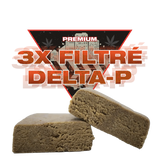


Fake Piatella: how to spot a genuine, good-quality Piatella

By the Golden High teamUpdated 17 November 202610 min read
Piatella · The checks
A fake Piatella is a resin sold under that name without being made that way: an ordinary hash renamed, a cut paste, or worse, a product sprayed with synthetic cannabinoids. To spot one, first look at the texture, smell and colour, then the price and above all the lab analysis: eye and nose cannot detect a synthetic molecule. Here are the real checks, the myths to forget, and how we control our batches.

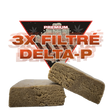
Piatella Delta-P 50%
Our classic Piatella: soft, melting, with a traditional buttery hash taste. Stated strength, tested batch.
From5,50 €View product →
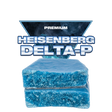
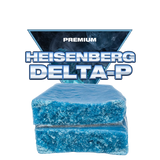
Heisenberg Delta-P 60%
The blue Piatella with blueberry, supple texture and an even shade throughout.
From5,50 €View product →The definition
A fake Piatella, three scenarios.
Piatella is not a strain or a molecule: it is a way of doing things. You start from a bubble hash, extracted with ice water from fresh frozen plants, press it flat and let it cure in the cold for several weeks. This slow curing, the cold cure, gives the creamy, buttery texture. It is all told in our article Piatella: the creamy hash explained.
The name itself is protected by nothing. It has become trendy, and today you see it stuck on resins that have nothing to do with it. Behind a fake Piatella, you almost always find one of these three cases.
The renamed resin
An ordinary hash, dry or simply pressed, sold as "Piatella" to ride the trend. Not dangerous in itself, but you are not paying for what you think you are buying.
The worked paste
A resin artificially softened, heated, oiled or flavoured to imitate the creamy texture. It sticks to the fingers, but it doesn't melt the same way and doesn't smell of the plant.
The sprayed product
The most serious case: a poor resin onto which a synthetic molecule has been added to "boost" the effect. Undetectable by eye, and classed as a controlled drug in France.
Piatella or piattella: both spellings mean the same product. A spelling mistake is not a sign of a counterfeit.
Spotting a genuine Piatella
Spotting a genuine Piatella with your senses.
The first checks need no equipment. They let you rule out most renamed resins. They are not enough, however, to rule out a sprayed product: more on that below.
- A supple, creamy texture. At room temperature, it deforms under the finger and sticks a little, without being oily. It crumbles with the warmth of the hand, no lighter needed.
- A clear smell as soon as you open it. Round, resinous, true to the plant. The cold of the curing preserves the terpenes, those aromatic compounds that disappear quickly with heat.
- An even colour. Blond, beige or cream for a classic Piatella, with no dry patches or suspect spots. On a coloured Piatella, the shade should be consistent from end to end.
- A hold that changes with temperature. In the cool, it firms up; between the fingers, it becomes malleable again. It is the signature of a cold-cured resin.
- Dry and brittle. If it snaps cleanly or crumbles to dust, it is another hash, or a very badly stored Piatella.
- Greasy and shiny. A resin that leaves an oily film on the fingers may have been softened with a fat.
- A candy or chemical smell. An artificial sweet note, a solvent or mould smell has no place in a Piatella.
- Very dark, almost black. A sign of oxidation, overheating during pressing or storage in the light.
These criteria apply to the Piatella style in general. To see what even textures and colours look like, compare with the pages of our Piatella collection, where each resin shows its colour, flavour and strength.
The myths
The flame test: useful, but not proof.
It is the advice you read everywhere: bring a flame close, and if the resin bubbles, it is good. The test comes from the bubble hash world, where makers grade their hash in "stars" according to how it melts. A "full melt" hash, the purest, melts almost without leaving a trace; lower grades bubble too, but leave a residue of plant matter.
So the test says something about a resin's cleanliness. It says nothing about its composition. Here is what you can expect from it, and what you can't.
| The test | What it can show | What it doesn't show |
|---|---|---|
| Bubbles under flame | The presence of resin oil, little plant matter | Strength, molecule, origin |
| Residue after heating | A hash loaded with debris if a lot of ash remains | The presence of a synthetic molecule |
| Suppleness to the touch | Cold curing, good storage | Whether the suppleness comes from an additive |
| Smell | Freshness of the terpenes, an added aroma | A spraying of synthetic cannabinoid |
- "It bubbles, so it's pure." A resin cut with a fat can bubble too.
- "It burns well, so it's strong." Burning measures no strength.
- "It smells good, so it's safe." An aroma can be added, and a synthetic molecule has no particular smell.
If you do the test, do it on a crumb, away from anything flammable. And keep in mind that it sorts out badly made resins, not dangerous ones.
Cut Piatella
A price that's too low, a warning sign.
A genuine Piatella is expensive to produce. It takes plants frozen right after harvest, an ice water extraction with limited yield, drying without heat, then around 4 to 6 weeks of curing between 4 and 10 °C, in the dark and with no temperature swings. All that time, the resin ties up space and cold.
When a "Piatella" is sold clearly below the price of the other premium resins in the same shop, there is an explanation. Sometimes it is an honest clearance. Often, the long step was skipped, or the starting resin was not a bubble hash.
- Compare the price per gram on the same size: 1 g against 1 g, 10 g against 10 g.
- Be wary of spectacular strengths advertised at a low price with no supporting document.
- A "guaranteed effect" or an "effect like the real thing" on a resin under 0.3% THC should alert you: it is often the pitch of sprayed products.
As a benchmark, our Piatella start at €5.50 per gram on the smallest size. Up-to-date prices are always those on the Piatella page, where the product page prevails.
What the sources say
The real danger: sprayed resin.
A renamed resin costs you money. A sprayed resin can send you to the emergency room. The principle: take a cheap hash poor in cannabinoids and add a very powerful synthetic molecule. Health agencies have documented the phenomenon for several years. References at the bottom of the page.
Drug Testing and Analysis · 2022
Researchers at the University of Basel analysed 94 cannabis samples brought to three Swiss drug-checking services between January 2020 and July 2021: 47, half, contained synthetic cannabinoids, including 22 hashes. The authors note that these products cannot be told apart by eye or smell.
Same study · the effects
Users of the adulterated products reported more adverse effects than the others (75% against 48%), mostly psychological and cardiovascular. The most frequently found cannabinoid was MDMB-4en-PINACA.
ANSM and Anses · 19 June 2025
The two French agencies report several hundred poisonings since early 2024 linked to "CBD-based" products containing other substances, unknown to the consumer: HHC, HHC-O, H4-CBD, MDMB-PINACA, or THC above 0.3%.
Mildeca and CEIP · 2023 study
Cited by the ANSM: 8 CBD-based products out of 10 had a CBD content different from the one on the label. The name and strength printed are no substitute for an analysis.
These molecules are classed as controlled drugs in France: HHC since 13 June 2023, and H4-CBD, H2-CBD, THCP and the whole benzo[c]chromene-ring family since 3 June 2024 (ANSM decisions). We devoted a whole article to one of these lab products: ADB-PINACA, the lab cannabinoid.
If a product gives you an unexpected effect (palpitations, severe anxiety, vomiting, feeling faint), stop immediately and call emergency services: 112 across Europe, or 15 (SAMU) in France. The ANSM asks you to keep what is left of the product, whatever it is, so it can be analysed, and to report the incident on signalement.social-sante.gouv.fr.
The only proof
The lab analysis, the only reliable judge.
Since the senses cannot detect a synthetic molecule, the only serious answer is analysis. A certificate of analysis, often called a COA, is a lab document listing the cannabinoids measured in a specific batch. Here is how to read it in a minute.
The batch number
It must match the one on your bag. An analysis with no batch number, or from an old batch, proves nothing about what you are holding.
The laboratory
Name, address, date. A third-party lab, independent of the seller, is better than an in-house document.
Total THC
It must stay under 0.3%, the threshold set for hemp products by the French order of 30 December 2021.
The list of molecules
It must be consistent with what is advertised. A classed molecule that shows up, or a document that names no molecule at all, is a no.
A shop that refuses to show you the analysis of a batch has a problem with that batch. We covered the question of trust, and why it should rest on proof rather than promises, in can you really trust THC-free CBD products.
At Golden High
How we guarantee our Piatella.
Let's be plain: the original Piatella, the one from the Barcelona clubs, is a THC hash, classed as a controlled drug in France. What we sell are resins that reproduce the Piatella style, its texture, look and aroma profile, in a Delta-P version: a CBDX-based range, under 0.3% THC. How it works is detailed on our Delta-P page.
| Fake Piatella | Golden High Piatella | |
|---|---|---|
| Strength | Missing or unverifiable | Stated on every page (30 to 60%) |
| THC | Unknown | Under 0.3%, checked on every batch |
| Analysis | Nowhere to be found | Every batch goes through the lab |
| Colour and flavour | Vague, "guaranteed effect" | Precisely described, no promise of effect |
| Price | Abnormally low | From €5.50 per gram, product page prevails |
Our Piatella run from the classic 50% Piatella to the four 60% coloured Piatella, including the Heisenberg, the blue Piatella with blueberry, our best seller. You will find them all, with their colour, flavour and strength, in the Golden High Piatella collection.
Keep in mind: our resins are for adults only. At 50 or 60% strength, start with a crumb, wait about fifteen minutes before going again, and never drive after using them.
Your questions
What people ask us about fake Piatella.
How to spot a fake Piatella?
A fake Piatella is often dry and brittle, or on the contrary greasy and shiny, with a weak or artificial smell and an abnormally low price. But a product sprayed with synthetic molecules cannot be spotted by eye: only a lab analysis of the batch proves it.
How do you know if a Piatella is good quality?
A quality Piatella is supple and creamy at room temperature, evenly coloured, with a clear smell as soon as you open it. It firms up in the cool and becomes malleable again between the fingers. Its strength is stated and its batch is tested.
Does the flame test show a genuine Piatella?
Only in part. Bubbles indicate a resin rich in oil and poor in plant matter, but the test says nothing about strength or the presence of a synthetic cannabinoid. A resin cut with a fat can bubble too.
What is a cut Piatella?
It is a resin to which something else has been added: a fat or an aroma to imitate texture and taste, or a synthetic molecule to boost the effect. The latter case is dangerous and is a controlled drug in France.
Why is Piatella more expensive than a classic hash?
Because it needs fresh frozen plants, an ice water extraction with limited yield, then 4 to 6 weeks of cold curing. A very cheap Piatella has often skipped one of those steps.
Can a fake Piatella be dangerous?
Yes, when it is sprayed with synthetic cannabinoids. The ANSM and Anses have recorded several hundred poisonings since early 2024 linked to "CBD" products containing other substances. After any unexpected effect, stop and call 112, or 15 (SAMU) in France, if needed.
Is Golden High Piatella tested?
Yes. Every batch of our Piatella goes through the lab and meets the 0.3% THC threshold. The Delta-P strength is stated on every page. Our products are for adults only.
Sources
The references cited in this article.
- ANSM et Anses (2025). Augmentation des intoxications causées par des produits à base de CBD contenant d'autres substances (French agencies, in French).
- Drug Testing and Analysis (2022). Adulteration of low-delta-9-tetrahydrocannabinol products with synthetic cannabinoids: Results from drug checking services.
- ANSM (2024). L'ANSM inscrit de nouveaux cannabinoïdes sur la liste des stupéfiants (in French).
- ANSM (2023). L'ANSM classe l'hexahydrocannabinol (HHC) et deux de ses dérivés sur la liste des stupéfiants (in French).
- Légifrance. Arrêté du 30 décembre 2021 portant application de l'article R. 5132-86 du code de la santé publique (French order, in French).
- Sensi Seeds. Piattella Hash: What Is It, and How to Make Piattella.
- The Press Club. How Bubble Hash Is Rated (commercial source, cited for the grading scale).