

What is a chillum? Where it comes from and how to use one

By the Golden High teamUpdated 25 November 20269 min read
Accessories
So, what is a chillum? It's a straight, conical pipe with no bent stem and no water: you load the wide end and draw through the narrow end, hands cupped around the tube. Born in India and Nepal, where sadhus still share it at the festivals of Shiva, it's traditionally carved from soft stone or clay. Here's where it comes from, how it works, what stone, wood or glass models are worth, and what you need to know before using one.

Grinder Metal Weed Gold
Four tiers of gold-tone metal with a screen and pollen catcher, for an even grind before loading.
From8,90 €View product →
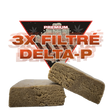
Pack Shit · 3 resins
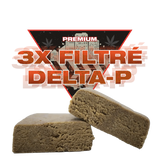
3X Filtré, Piatella and Black Hasch Delta-P together: three textures to compare side by side.
From37,90 €View product →The definition
The chillum, a cone-shaped pipe.
A chillum is a conical tube open at both ends. No separate bowl, no stem, no water: the cone is both the bowl and the airway. The material goes in the flared end, the smoke travels down the tube and you draw through the narrow tip, usually without putting your lips on it, through your closed hands.
The word comes from the Hindi cilam, itself borrowed from Persian, where it's linked to the water pipe. It's also spelled chilam or chilom, and some French dictionaries have gallicised it as "shilom". It entered English in the late 18th century, during the British presence in India.
- Shape: straight and conical, in very varied sizes.
- Materials: terracotta, soft stone (soapstone), wood, horn, glass.
- Accessories: a small stone stopper (the "stone") and often a damp cloth.
- Use: smoked by hand, often shared, with no water filtration.
Where the chillum comes from
The Indian chillum, the pipe of the sadhus.
In India and Nepal, the chillum is above all the object of the sadhus, Hindu ascetics who have renounced ordinary life. Many are devotees of Shiva, a god tradition associates with cannabis. Every year, on the eve of Maha Shivaratri, the Nepali press photographs sadhus smoking chillums within the grounds of the Pashupatinath temple in Kathmandu, even though the site's authorities now try to limit the practice.
The Indian chillum is traditionally smoked with charas, the hand-rubbed resin of the Himalayas, which we introduce in our article on charas. It's the same world as the Indian hemp that fascinated French writers in the 19th century.
In Africa
Conical pipes carved from horn, gourds or ivory were used for cannabis and later tobacco. A conical ivory pipe is attributed to King Mutesa of Buganda.
Among Rastas
In Jamaica, the cow-horn or wooden chillum is part of Rastafari "reasoning sessions", alongside the "chalice", a water variant.
The chillum became known in the Americas and Europe from the 1960s, with the hippie trail to India and the counterculture. That's where its image as a travel souvenir comes from, often brought back from Goa or Kathmandu.
Materials
Stone, wood or glass chillums.
The material changes everything: how much heat reaches your fingers, the taste, the sturdiness and how easy it is to clean. Here are the four main families you'll find in shops.
| Material | Strengths | Weaknesses |
|---|---|---|
| Stone (soapstone) | The Indian classic, handles heat well, develops a nice patina | Heavy, breaks if dropped, porous so it holds on to smells |
| Terracotta | The cheapest, the most traditional, neutral taste once seasoned | Fragile, heats up quickly, clogs deep down |
| Wood | Light, pleasant in the hand, fine craftsmanship | Can burn or crack, woody taste at first, hard to clean |
| Glass (borosilicate) | Cleans thoroughly, keeps no taste, you can see the build-up | Breakable, heats up quickly at the bowl end, often smaller |
The stone chillum, the most sought after, is usually carved from soapstone (steatite), a soft stone that's easy to sculpt. You can tell a stone model by its weight and its slightly soapy feel. For occasional use with simple cleaning, glass remains the most practical.
How to use it
How to smoke a chillum, step by step.
The chillum has its own gestures, inherited from Indian tradition. They mostly serve a practical purpose: stopping embers and particles from reaching your mouth.
Place the stone
A small conical stone slides into the bottom of the bowl. It holds the material in place and lets air through.
Load it finely
Well-ground material, a little more packed at the bottom, looser on top. A grinder makes it much more even.
Hold it with both hands
Close your hands around the mouthpiece and draw through the gap between your fingers, without touching the tube with your lips.
Many smokers also wrap a small damp cloth around the mouthpiece, called a saafi in Indian tradition. It catches some of the ash and makes sharing a little cleaner, without filtering out anything chemical. For an even grind, our Grinder Metal Weed Gold does the job, and you'll find the rest of the gear in our accessories collection.
Watch the amount: a chillum takes a bigger load than a standard pipe, and one draw can be very dense. With a strong product, start with a small load and wait before having more. Adults only, never before driving.
What the sources say
The real risks of the chillum.
No study has focused on the chillum itself. But it combines three well-documented factors for cannabis smoke: combustion, no cooling, and sharing.
INSPQ · effects of cannabis smoke
Quebec's National Institute of Public Health links regular use by combustion to coughing, wheezing and chronic bronchitis, while noting that a direct link with COPD hasn't been shown to date.
CDC · Seattle, 2004
A tuberculosis outbreak affected 11 connected young cannabis smokers who shared smoke in enclosed spaces. Several developed cavitary forms, which are highly contagious.
Frontiers in Public Health · 2024
In Thailand, a case-control study associates smoking and sharing a cannabis bong with a risk of active pulmonary tuberculosis about 4.2 times higher.
Internal Medicine Journal · 2013
In Australia, three cases of cavitary tuberculosis in smokers of home-made bongs; among their contacts, sharing a patient's bong multiplied the risk of infection.
- Hot smoke. The tube is short and barely cools the smoke, which hits your throat hot.
- Deep draws. The smoke is often inhaled deeply and held, which increases exposure to tar and carbon monoxide.
- A shared object. Even without lip contact, hands and cloth pass from person to person. Keep your own chillum.
- Burns. Stone and terracotta get scorching at the bowl end: hold it lower down.
These studies concern bongs or shared sessions, not the chillum itself: above all they show that sharing a smoking device passes on what's in your lungs. References at the bottom of the page.
Compared with other methods
Chillum, pipe, bong, joint: who does what.
| Chillum | Pipe | Bong | Joint | Vaporiser | |
|---|---|---|---|---|---|
| Principle | Straight cone, combustion | Bowl + stem | Combustion + water | Combustion in paper | Heats without burning |
| Smoke | Hot, dense | Hot | Cooled by water | Variable, often with tobacco | Vapour, no smoke |
| Sharing | Traditionally shared | Mostly personal | Often shared | Often shared | Mostly personal |
| Cleaning | Moderate to hard | Moderate | Demanding | None | Regular |
| Who it suits | Experienced smokers | Small doses | Big sessions | Social use | Less combustion |
If you want to understand what water really does to smoke, read our article on the bong. And if it's combustion you want to avoid, the vaporiser remains the option that heats without burning.
Choosing well
Choosing and caring for your chillum.
- Size: a short model takes a small load and is easier to control. Big chillums are made for sharing.
- Stone fit: it should stay in place without blocking the air. A stone that's too small falls into the tube.
- Cleaning: glass goes in isopropyl alcohol with coarse salt; stone and clay are cleaned with hot water and a pipe cleaner, then left to dry for a long time.
- Wood: avoid soaking it, a simple brush is enough.
On the product side, a soft resin crumbles easily into the bowl. Our Pack Shit brings together three Delta-P resins, all under 0.3% THC and lab-tested, so you can compare textures. The rest of the selection is covered in the 5 accessories that really change your experience.
Your questions
What people ask us about the chillum.
What is a chillum?
A chillum is a straight, conical pipe with no stem and no water. You load the wide end and draw through the narrow end, usually through cupped hands.
How do you smoke a chillum?
Place a small stone at the bottom of the bowl, load well-ground material, then draw through your hands closed around the mouthpiece, often with a damp cloth. A small load to start, adults only.
What is the stone in a chillum for?
The stone is a small conical stopper placed at the bottom of the bowl. It stops the material and embers from going down the tube while letting air through.
Which chillum is best: stone, wood or glass?
Stone is the most traditional and handles heat well, wood is light but wears, glass cleans best. For occasional use, glass is the simplest.
Why do sadhus smoke the chillum?
Many sadhus are devotees of Shiva, whom Hindu tradition associates with cannabis. Smoking the chillum is part of their practices, especially at the Maha Shivaratri festival in Nepal.
Is a chillum more dangerous than a joint?
No study compares the two directly. A chillum gives hotter smoke and denser draws, and sharing it carries an infection risk. A joint, on the other hand, often contains tobacco.
Is a chillum legal in France?
The object itself is sold freely as an accessory in France. What matters is what you smoke: THC cannabis is a controlled drug there, while hemp products under 0.3% THC are sold in shops.
Sources
The references cited in this article.
- Wikipedia. Chillum (history, materials, Rastafari uses).
- Dictionary.com. Chillum — definition and origin.
- The Himalayan Times (2018). Babas congregate for Mahashivaratri at Pashupatinath.
- CDC, Emerging Infectious Diseases (2006). Tuberculosis outbreak in marijuana users, Seattle, Washington, 2004.
- Frontiers in Public Health (2024). Increased active pulmonary tuberculosis risk from sharing bong of cannabis: a case–control study from Thailand.
- INSPQ. Health effects of cannabis use (in French).
Keep reading