

What are dabs? Dab meaning, wax, shatter, dab rigs and risks

By the Golden High teamUpdated 9 November 202612 min read
Extractions
Dabs are small doses of cannabis concentrate (wax, shatter, budder, live resin or rosin) that are vaporised by placing them on a red-hot surface, usually with a dab rig. These extracts can reach up to 90% THC, against 5 to 25% for dried flower. Here's where the word comes from, how to tell the different concentrates apart, how the gear works, what studies say about the risks and what French law says.

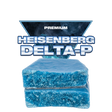
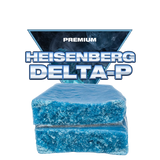
Heisenberg Delta-P 60%
The highest-level resin in our range: 60% Delta-P, best kept for people who already know resins.
From6,50 €View product →
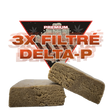
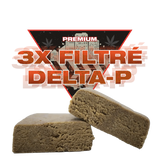
3X Filtré Delta-P 40%
A resin in the triple-filtered style: soft, even texture, a high but readable level.
From6,50 €View product →Shop the selection: Strong CBD hash – Delta-P resins →
The word
Dab meaning: what we're talking about.
In everyday English, a dab is a small amount of something, a touch you put down. In cannabis slang, a dab is a small dose of concentrate, and dabbing means vaporising it on a very hot surface to inhale the vapour. An editorial published in Cureus in 2017 defines it exactly that way: a cannabis concentrate volatilised on contact with a red-hot platform, whose vapour goes through a water pipe before being inhaled.
The word has other lives, hence the confusion on Google. "The dab" is also the dance move where you drop your face into the crook of your elbow while stretching out the other arm: born on Atlanta's hip-hop scene, it went global in 2015 with Migos' Look at My Dab and athletes' celebrations. And DAB, in capitals, is digital radio. Neither has anything to do with cannabis.
The dab rig
A small glass water pipe, a cousin of the bong, where the bowl is replaced by a "nail" (or banger) in quartz, titanium or ceramic that you heat. The vapour passes through water before being inhaled.
The e-rig and the dab pen
Electric versions: a coil heats the nail or chamber to a set temperature, with no flame. The dab pen is the pocket format. The principle is still to vaporise a concentrate.
Dab rigs and bongs look alike but don't do the same job: a bong burns plant material in a bowl, a dab rig vaporises a concentrate on a hot surface. We cover bongs in detail in what is a bong.
What gets dabbed
Cannabis dabs: the resin without the plant.
A cannabis flower is mostly plant matter. The cannabinoids and terpenes are found mainly in the trichomes, the tiny resin glands covering the buds. A concentrate is the result of an operation that's simple in principle: separate that resin from the rest and keep only the active part.
There are two big families. Solvent extracts, made with hydrocarbons like butane or propane, sometimes with CO2: that's the world of BHO (butane hash oil), where wax, shatter and budder come from. And solventless extracts, made only with water, screens, heat or pressure: ice water hash, dry sift, rosin. Traditional hash is, at heart, the oldest concentrate of all; we explain it in what is hash.
- What changes compared to flower: the amount of cannabinoids per gram, which is far higher.
- How they're consumed: mostly vaporised, with a dab rig, an e-rig or a pen.
- The name: it describes a texture or a method, not a guaranteed quality.
- In France: with THC, they're controlled drugs, whatever their name or process.
Types of concentrate
Wax, shatter, live resin, rosin: how to tell them apart.
Concentrate names mainly describe a texture and an extraction method. The definitions below follow those of the trade magazine Cannabis Tech. Quebec's health authorities group wax and shatter among "solid concentrated extracts", which can reach 90% THC.
| Name | Look | Method |
|---|---|---|
| Shatter | Translucent slab, from soft toffee to brittle glass | Solvent (butane, sometimes CO2) |
| Wax | Soft, from icing to sticky wax | Solvent, texture set at the end of the process |
| Budder | Creamy, whipped | Solvent |
| Live resin | Varies, very aromatic | Solvent, from fresh frozen plant |
| Rosin | Amber, sticky | Solventless: heat and pressure |
Live resin stands out for its raw material: fresh plants frozen right after harvest instead of dried flowers, to keep more terpenes. Rosin is the only solventless one in the table; we've written a full guide on it, what is rosin. Water extractions, like frozen hash, belong to the same solventless family.
- "The lighter it is, the purer it is": colour also depends on the raw material and the process, it's not a measure of strength.
- "Shatter and wax are different products": they're often the same kind of extract, with a different texture.
- "Solventless means mild": a THC rosin is still a heavily loaded concentrate.
The gear
Dab rig, e-rig and temperature: why heat matters.
In dabbing, the nail temperature is the hardest variable to control. With a classic dab rig, you heat the nail and then let it cool by eye; with an e-rig, the temperature is set and held. That's one reason users talk about "low temp dabs", to preserve the aromas.
It's not just about taste. A Portland State University study published in ACS Omega in 2017 recreated the conditions of a real dab in the lab: the terpenes in the extracts formed methacrolein and benzene, along with other compounds of health concern. The authors stressed that how hard it is to control nail temperature exposes users to these substances.
- The nail (or banger): the surface that vaporises the concentrate, the hottest point in the system.
- The carb cap: a cap that holds the vapour above the nail.
- The dabber: the metal or glass tool used to pick up the concentrate.
- The torch or the coil: the heat source, a flame for the dab rig, electric for the e-rig.
What the sources say
Potency, solvents, burns: the data.
Plenty of shock figures circulate about concentrates. Here are the ones from institutional sources or scientific journals, with their year. Full references at the bottom of the page.
Government of Quebec
THC levels given range from 5 to 25% for dried flower, up to 35% for hash, 60% for hash oil and 90% for other solid concentrated extracts like wax and shatter.
Cureus · 2017
The editorial reports an analysis of 57 concentrates: for 56 of them, maximum THC ranged from 23.7% to 75.9%, and more than 80% of samples were contaminated with solvents or pesticides. It also describes clinical cases of people aged 17 to 26 hospitalised after a dab.
Journal of Medical Toxicology · 2015
BHO can contain up to 90% THC. At the University of Colorado burn centre, 29 cases of burns linked to making it were admitted between January 2008 and August 2014; six patients had to be intubated.
ACS Omega · 2017
Recreating a real dab, the researchers saw methacrolein, benzene and other terpene breakdown products form.
OFDT · resin in France
The average THC content of seized resin rose from 12.3% in 2011 to 29% in 2023. Resins made with special extraction methods, for example with chemical solvents, sell for €15 to €30 a gram, against around €8 for ordinary resin.
These figures should be read for what they are: measurements on tested samples or official ranges, not the make-up of every product. But they tell a clear story. A 15% flower and an 80% extract aren't the same substance at different doses: they're experiences on a different order of magnitude.
Harm reduction
The risks of dabs: dose comes first.
The first risk is simple arithmetic. A dab packs into a few milligrams what a flower spreads over a whole joint. The authors of the Cureus editorial believe it's the THC level, even more than the contaminants, that drives the toxicity in the cases described, and call for research on the toxic dose in humans.
Be wary of untested products. In 2025 the ANSM and Anses, France's health agencies, reported several hundred poisonings since early 2024 linked to products sold as "CBD-based" that actually contained other substances, like H4-CBD. A concentrate without a reliable label could contain anything, including semi-synthetic cannabinoids classed as controlled drugs.
- Residual solvents: a poorly purged butane extract can keep traces of it, as the contaminated samples above show.
- Home extraction: butane is a highly flammable gas; the Colorado study documents serious burns. Never try an extraction at home.
- Temperature: a nail that's too hot produces unwanted breakdown compounds.
- Tolerance: repeated use of heavily loaded products shifts the dial fast. We talk about it in powerful molecules and controlled sessions.
Rules that don't change: products for adults only, start low and wait, and never drive after using a psychoactive product.
The legal framework
Dabs and the law in France: what applies in 2026.
In France, a concentrate containing more than 0.3% THC is a controlled drug, just like resin or weed: the product name (wax, shatter, rosin, live resin) changes nothing. Only hemp products under 0.3% THC are tolerated (order of 30 December 2021). And a "CBD" concentrate spiked with HHC, THCP or H4-CBD is still a controlled drug, since these molecules were classified in 2023 and 2024.
30 Dec 2021
An order sets the maximum THC level of hemp products at 0.3%.
13 June 2023
HHC, HHC-O and HHC-P are classed as controlled drugs (ANSM decision).
3 June 2024
The ANSM classifies cannabinoids with a benzo[c]chromene core, including THCP and THCA, as well as H4-CBD and H2-CBD; the Conseil d'État upholds this on 6 June 2025.
20 August 2026
The fixed penalty for drug use rises to €500 (€400 reduced, €1,000 increased), and goes on the criminal record.
Illegal drug use is still punishable in France by one year in prison and a €3,750 fine (article L3421-1 of the Public Health Code). Making a butane extract at home adds another problem: producing controlled drugs is a serious criminal offence, and the risk of explosion is very real.
At Golden High
Where our Delta-P resins fit in.
Let's be clear: we don't sell dab concentrates, no wax, no shatter, no live resin. Our resins are products from the Delta-P range, made with CBDX, under 0.3% THC and lab-tested. They take on the style of a hash, not the composition of a THC extract. How it works is explained in the Delta-P guide.
If you're after a resin texture with a high level, the Heisenberg Delta-P 60% is the most loaded in the range, while the 40% 3X Filtré Delta-P follows the triple-filtered style. Every product, with the level stated on each page, is in our Delta-P resin collection.
Whatever the product: check the level, ask for the batch analysis, start low, and never before driving. Adults only.
Your questions
What people ask us about dabs.
What is a dab?
In cannabis slang, a dab is a small dose of concentrate (wax, shatter, rosin…) vaporised on a red-hot surface, usually with a dab rig, then inhaled.
What are dabs?
Dabs are doses of cannabis concentrate. The word comes from "dab", a small amount. "The dab" is also a dance move made popular in 2015, and DAB is digital radio.
What is dabbing?
It's vaporising a concentrate on a very hot nail, with a dab rig or an e-rig, to inhale the vapour. It packs a high dose of cannabinoids into a single hit.
What's the difference between a dab rig and a bong?
A bong burns plant material in a bowl. A dab rig is smaller, and instead of a bowl it has a quartz, titanium or ceramic nail that vaporises a concentrate.
What's the difference between wax and shatter?
They're often the same kind of solvent extract: shatter is hard and glassy, wax soft and sticky. The texture is decided in the last stages of the process.
Are dabs dangerous?
The main risk is the dose: a concentrate can reach 90% THC. On top of that come residual solvents (over 80% of 57 tested concentrates were contaminated), terpene breakdown on an overheated nail and burns from butane extraction.
Are dabs legal in France?
No, if they contain more than 0.3% THC: they're controlled drugs, and since 20 August 2026 use can be hit with a €500 fixed fine.
Are Golden High resins dab concentrates?
No. They're resins from the Delta-P range, made with CBDX, under 0.3% THC and lab-tested. They take on the style of a hash; they're neither wax nor shatter.
Sources
The references cited in this article.
- Government of Quebec. Description et composition du cannabis (in French).
- OFDT. Cannabis (résine, herbe, huile, CBD) - Synthèse des connaissances (in French).
- Cureus (2017). To Dab or Not to Dab: Rising Concerns Regarding the Toxicity of Cannabis Concentrates.
- Journal of Medical Toxicology (2015). Butane Hash Oil Burns Associated with Marijuana Liberalization in Colorado.
- ACS Omega (2017). Toxicant Formation in Dabbing: The Terpene Story.
- ANSM. Augmentation des intoxications causées par des produits à base de CBD contenant d'autres substances; L'ANSM inscrit de nouveaux cannabinoïdes sur la liste des stupéfiants (in French).
- Légifrance. Order of 30 December 2021; article L3421-1 of the Public Health Code (in French). Cannabis Tech, The Different Types of Cannabis Concentrates Explained; Wikipedia, Dab (dance).