

THC urine test: how long until you test negative, by usage

By the Golden High teamUpdated 9 November 202610 min read
Drug testing
A THC urine test usually stays positive for about 3 days after a one-off use, 10 to 15 days with daily use, and sometimes over 30 days for heavy users. The test doesn't look for THC itself but for its metabolite, THC-COOH, which leaves the body slowly. Here are the detection times reported by medical sources, the lab cut-offs (50 and 20 ng/mL), what makes the window longer or shorter, the case of CBD and neo-cannabinoids, and genuine false positives.

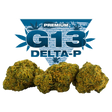
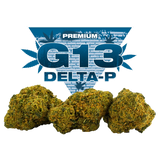
Gelato Delta-P 10 %
Our gentlest flower, to discover Delta-P at a moderate strength. Adults only, never before driving.
From5,40 €View product →
Amnesia Delta-P 12 %
Our most requested flower, with its strength shown and lab-tested, and a lemony profile.
From4,90 €View product →How it works
THC urine test: it looks for a waste product, not THC.
When you use cannabis, your liver turns THC into several metabolites. The main one, THC-COOH (11-nor-delta-9-tetrahydrocannabinol-9-carboxylic acid), has no psychoactive effect but ends up in your urine. That's what the test targets. It's why a urine test shows that you've used, without saying whether you're high when the sample is taken.
THC dissolves very easily in fat. In regular users, it builds up in fatty tissue and is then released slowly: that's what explains the long positive windows, as the Mayo Clinic Proceedings review on interpreting urine drug tests points out.
A strip that reacts is only a preliminary result: only lab confirmation identifies the exact molecule.
Detection times
THC urine test: how long until you test negative.
It's the question we get asked most: how long does THC stay in your urine? The honest answer: it mostly depends on how often you use. The two references below give benchmarks, not guarantees, and the figures floating around forums aren't any better.
| Usage profile | Mayo Clinic Proceedings (2017) | Drogues Info Service (2025) |
|---|---|---|
| Single use | About 3 days | 3 to 5 days (occasional use) |
| Moderate use (about 4 times a week) | 5 to 7 days | — |
| Daily use | 10 to 15 days | 30 to 70 days (regular use) |
| Heavy chronic user | Over 30 days | — |
The gaps between the two tables aren't a mistake: they reflect how much people vary and how hard it is to define "regular use". Drogues Info Service, the French public drug information service, says it plainly: these times are only benchmarks, and there's no way to know exactly how long you'll stay positive.
- Frequency: the number one factor. Daily use stretches the window from a few days to several weeks.
- Dose and THC strength: the more THC you consume, the more THC-COOH there is to clear.
- Body fat: THC is stored in fat and released from it slowly.
- The lab cut-off: a test at 20 ng/mL stays positive longer than one at 50 ng/mL.
- Urine: the longest window, from a few days to several weeks.
- Saliva: 6 to 8 hours for occasional use, up to 24 hours for regular use, and up to 8 days with heavy use, according to Drogues Info Service.
- Blood: THC itself for 2 to 8 hours after occasional use, its metabolite for up to 72 hours.
Roadside tests, on the other hand, use saliva. We cover them in detail in our article on THC, HHC and CBD saliva tests.
What the sources say
What the key studies show.
Several studies answer the questions that keep coming up: CBD, passive exposure, new cannabinoids. All references are at the bottom of the page.
Mayo Clinic Proceedings · 2017
Review on interpreting urine tests: about 3 days after a single use in a non-user, over 30 days in a chronic user. Federal cut-offs: 50 ng/mL for screening, 15 ng/mL for confirmation.
Journal of Analytical Toxicology · 2020
Six adults were given 100 mg of pure CBD, oral or vaped: out of 218 urine samples, just one reacted at the 20 ng/mL screen, and none was confirmed. With a CBD-rich flower containing 3.7 mg of THC, two samples went over the 50 ng/mL cut-off.
Passive exposure · study cited by the Mayo Clinic
Non-smokers spent an hour with smokers: no positives at 20 ng/mL in a ventilated room. In a closed room, with 11.3% THC cannabis, several positives at 20 ng/mL and only one at 50 ng/mL.
Forensic Toxicology · 2025
HHC metabolites (HHC-COOH) react with three commercial THC urine tests. The authors urge caution about false positives caused by HHC.
What this means in practice: pure CBD barely triggers the tests, but a product containing traces of THC can trigger one, especially with heavy, repeated use. And neo-cannabinoids aren't "invisible".
CBD and neo-cannabinoids
CBD and urine tests: no guarantee.
In France, hemp products are allowed provided they contain less than 0.3% THC. Under 0.3% isn't zero: smoking a lot of a product with traces of THC means building up a little of it. The studies above show it's rarely enough to cross the cut-off, but it can happen.
Pure CBD (isolate)
No THC, so very little risk. That is, as long as the label tells the truth: the ANSM (the French medicines agency) reports products sold as CBD that actually contain too much THC or synthetic cannabinoids.
Hemp flowers and resins
Possible traces of THC under 0.3%. Heavy daily use raises the risk of reacting to a screen.
HHC and derivatives
Listed as controlled drugs in France since 13 June 2023 (ANSM decision). Their metabolites react with THC urine tests, according to a 2025 study.
Delta-P (Golden High)
A CBDX-based range, under 0.3% THC and lab-tested. No published study tells us how it behaves on a test, so we don't promise any result.
To understand what "THC-free" really means on a label, read can you trust THC-free CBD products. How Delta-P works is explained on our dedicated page.
False positives
False positives exist, but they're rare.
The first test, by immunoassay, picks up a molecular shape rather than one specific molecule. So some substances can trigger it. The Mayo Clinic Proceedings lists several for cannabinoids.
- Efavirenz, an antiretroviral: well-documented interference, caused by one of its metabolites.
- Anti-inflammatories (NSAIDs) such as ibuprofen or naproxen: very rare, 2 false positives out of 510 samples in the study cited.
- Proton pump inhibitors: a single case reported with pantoprazole, plus a mention in its leaflet.
- Dronabinol, a medicine made from synthetic THC: it gives a true positive, impossible to tell apart from cannabis.
- Some baby toiletries: reactions seen at 20 ng/mL in newborns, never at the 50 ng/mL cut-off.
If you're on medication, say so before the sample is taken. And if a screen comes back positive when you haven't used anything, ask for lab confirmation by chromatography: that's the result that counts.
The rules in France
Who can make you take a urine test in France.
Lab urine drug tests are mainly used in a medical, legal or occupational health setting. On the road, it's saliva that gets sampled, with lab confirmation.
At work
According to the INRS, France's occupational safety institute, a urine test is a medical lab test: it can only be carried out by a medical biologist or under their responsibility. An employer can't force the occupational doctor to prescribe one.
Saliva test
Under certain conditions (company rules, safety-critical roles, possible counter-test), an employer can have a saliva test carried out. That's the framework set by the Conseil d'État in December 2016, and echoed by the INRS.
On the road
Saliva screening. We've detailed what happens with CBD in smoking CBD before driving.
Medical follow-up
In medical or addiction care, it's the doctor who prescribes the test, and the result stays covered by medical confidentiality.
Key takeaways
No magic trick, just time.
The internet is full of "methods" to pass a test. We won't pass on any of them: at best they don't work, at worst they're dangerous, and labs check sample integrity, as the Mayo Clinic Proceedings review describes. The only thing that brings THC-COOH down is time without using.
Plan ahead
If you know a test is possible (work, medical follow-up, driving licence), the safest bet is not to consume anything, hemp included.
Be upfront
Mention any medication and, if you use CBD, tell the doctor: they'll interpret the result better.
Insist on confirmation
A positive screen without lab confirmation is only an indication. Ask for the confirmation test.
If you choose to consume, do it with products whose strength is shown and lab-tested, like our Delta-P flowers, starting with Amnesia Delta-P 12 %. Adults only, never before driving.
Your questions
What people ask us about urine tests.
THC urine test: how long until you test negative?
About 3 days after a one-off use according to the Mayo Clinic Proceedings (3 to 5 days according to Drogues Info Service), 5 to 7 days for moderate use, 10 to 15 days with daily use, and sometimes over 30 days for heavy users. There's no way to know your exact window.
How long does THC stay in a regular smoker's urine?
10 to 15 days with daily use according to the Mayo Clinic Proceedings, and Drogues Info Service mentions 30 to 70 days for regular use. For heavy chronic users, over 30 days is possible.
Does CBD show up on a urine test?
The test doesn't look for CBD but for a THC metabolite. Pure CBD barely triggers it. A hemp product containing traces of THC, however, can give a positive result with heavy use.
What's the cut-off for a positive THC urine test?
In the United States, the federal cut-off is 50 ng/mL for screening (some labs use 20 ng/mL) and 15 ng/mL of THC-COOH for lab confirmation.
Can you test positive for THC from other people's smoke?
It's rare. In a ventilated room, no non-smoker tested positive in the study cited. In a closed room with very strong cannabis, only one went over the 50 ng/mL cut-off.
Can a medicine cause a false positive for cannabis?
Yes, rarely: efavirenz is the best-documented case, anti-inflammatories and pantoprazole far more exceptionally. Lab confirmation settles the matter.
Does HHC show up on a urine test?
Its metabolites can trigger THC urine tests, according to a study published in 2025. And HHC has been a controlled drug in France since 13 June 2023.
Does Delta-P show up on a urine test?
No published study can tell us. Our products are under 0.3% THC and lab-tested, but traces of THC exist, so we don't promise any result. If a test is possible, the safest bet is not to consume anything.
Sources
The references cited in this article.
- Mayo Clinic Proceedings (2017). Clinical Interpretation of Urine Drug Tests: What Clinicians Need to Know About Urine Drug Screens.
- Drogues Info Service (2025). Table of detection times (in French).
- Journal of Analytical Toxicology (2020). Urinary Pharmacokinetic Profile of Cannabinoids Following Administration of Vaporized and Oral Cannabidiol and Vaporized CBD-Dominant Cannabis.
- Forensic Toxicology (2025). Cross-reactivity of the epimers of 11-nor-9-carboxy-hexahydrocannabinol, metabolites of hexahydrocannabinol, with panel tests for urinary Δ9-tetrahydrocannabinol metabolites.
- INRS. Addictions: regulations (in French).
- ANSM (2025). Rise in poisonings caused by CBD-based products containing other substances (in French).
- ANSM (2023). ANSM lists hexahydrocannabinol (HHC) and two of its derivatives as controlled drugs (in French).