

CBDV (cannabidivarin): a low-key cannabinoid with real potential
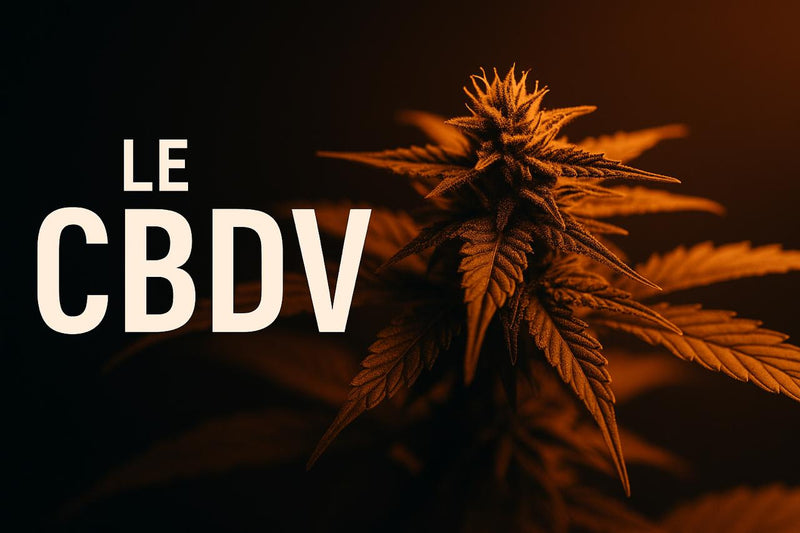
CBDV: a still low-key cannabinoid with plenty of potential
Everyone knows CBD. But have you ever heard of CBDV? This little-known cannabinoid, also called cannabidivarin, is slowly stepping out of the shadows. Scientists have actually been studying it since the 1960s. And today it is drawing more and more attention, especially from medical research. Here’s why.
What exactly is CBDV?
CBDV is a molecule found in certain hemp varieties, especially low-THC indicas. Its structure is close to that of CBD, but with a shorter side chain. That small change is enough for it not to behave quite like CBD.
Just like CBD, CBDV is not described as intoxicating. It interacts with our endocannabinoid system, the vast network of receptors found throughout the body. But it also acts on other channels, linked in particular to neuronal activity. Hence the interest neurology researchers are taking in it.
CBDV vs CBD: what are the differences?
CBDV and CBD look alike, but they don’t do quite the same thing.
- CBD is abundant in industrial hemp. CBDV, on the other hand, is rare.
- Their chemical structure differs slightly, which changes how they act.
- CBD is by far the more studied and the more widely used: many users say they take it to unwind.
- CBDV, for its part, is still a lab subject: it is being studied in connection with epilepsy, autism and muscular dystrophy, with no approved treatment to date.
- CBD has little direct affinity for the CB1 and CB2 receptors. Neither does CBDV: researchers are mostly interested in how it acts on other receptors and ion channels.
What does the research say?
CBDV is attracting a lot of interest in medical research. Here are a few avenues being explored, mostly in animals or in small trials:
- Epilepsy: anticonvulsant activity has been observed in animals, but a clinical trial in adults did not show it to be better than placebo,
- Nausea: results obtained in rodents only,
- Repetitive behaviours: studied in animal models,
- Autism: trials are under way, with no established result so far,
- Inflammation in the brain: preclinical data only,
- Cell growth and regulation: very preliminary laboratory work.
This is ongoing research: none of it has been demonstrated in humans, and CBDV is not a medicine.
Why don’t we hear about it yet?
CBDV is naturally rare, so harder to produce. Growers long focused on CBD, which is more profitable and better known. On top of that, few hemp varieties produce CBDV in sufficient quantity. New strains will have to be developed to improve its availability.
Another reason: the lack of media coverage. CBD has hogged the spotlight in recent years, pushing other molecules into the background. But things are starting to change.
Hemp’s next big name?
As knowledge and laws evolve, CBDV could well take up more space in the hemp world. CBDV-based drug candidates have been assessed in clinical trials, with no approval to date. Other formats could follow, if research and regulation allow.
As with CBD in its early days, it will take time. For now, no clinical trial has established its efficacy: CBDV is a molecule to watch, not a promise.
Key takeaways
- CBDV is a rare cannabinoid, described as non-intoxicating,
- It acts differently from CBD, notably on the nervous system,
- It is of interest to neurology research, with no efficacy demonstrated in humans so far,
- Its production is still limited, but growing,
- It could become a reference in the years to come.
If you’re interested in hemp and cannabinoids, keep an eye on CBDV. What comes next will depend on what the research confirms.